Don’t Carry It All

“Here we come to a turning of the season
Witness to the arc towards the sun
The neighbor’s blessed burden within reason
Becomes a burden borne of all in one
And nobody, nobody knows

Let the yoke fall from our shoulders
Don’t carry it all, don’t carry it all
We are all our hands in holders
Beneath this bold and brilliant sun
But this I swear to all”

Those are the first words of “Don’t Carry It All” — the first song on The Decemberists’ 2011 album “The King Is Dead.” I’ve had it stuck in my head the past few days, and I think I know why. We are, of course, coming to a turning of the season. The long, hot, humid days of summer are slowly but surely being replaced by much shorter, cooler, crisper ones.

But I think the real reason I can’t get the song out of my head is because so many of the individual words in the opening lyrics resonate with me: burden, shoulders, yoke, sun. Okay, so the use of each word in the song isn’t necessarily the same use that means something to me, but that’s beside the point. You’ll see what I mean. Let’s start with “burden.”

Burden

We’ve all got things we’re dealing with, but lately I feel like I can’t catch a break. Not that things are going “wrong” per se, just that there are a lot of things going on.

Merriam-Webster defines “Burden” a few ways:

-Something that’s carried

-Duty; Responsibility

-Something oppressive or worrisome

Between work, home and even my own health, there’s a lot on my mind these days — a lot on my heart, too. At times, it does feel burdensome. But I wouldn’t change a thing.

I moved from Seattle to Fort Worth, Texas, almost three months ago. That in and of itself has been an adjustment. I miss my family and friends, the mountains and the water… but I’m finding lots to do outdoors here, and I’m making new friends, too.

My partner Tim and I bought a house in a historic neighborhood that we love dearly, but as you can imagine, a house built in 1918 comes with its fair share of “quirks,” some of which have proven to be quite time consuming and expensive. We also blended our families — his two kids, my two cats — and while there was certainly a lot of anxiety leading up to it, the process couldn’t have gone more smoothly. I’m so grateful for that. 

I’ve now been with Simple Flying for six months — time flies! — and Tim is wrapping up a 10-year career with Spirit Airlines, which is bittersweet. Starting next month, we’ll be an American Airlines family. It’s all exciting, but it sure is a lot of change. And change is what often triggers my anxiety. A lot of my struggles over the years have revolved around having an “all or nothing” mindset — if everything isn’t perfect, everything is bad. It sounds extreme, I know, but what it really comes down to is, when I’m stressed about one thing, the stress tends to spill over into other areas of my life. So with everything going on, I’ve been carrying a lot of weight on my shoulders.

Shoulders

Those who’ve seen me out and about photographing airplanes have probably seen my “pack.” I’ve always carried a lot of gear with me…. in the past, it was two Nikon D3400s with three lenses (one of which was a big, heavy Sigma 150-600mm). Today, it’s a Sony Alpha 7 IV Mirrorless with two lenses (one of which is another big, heavy one… the Sigma 60-600mm). 

Over the last few years, I’ve done a lot of big “photo adventure” walks or bike rides in which I’ve traveled upwards of 20 miles on foot or 30 miles on two wheels, all while carrying that monstrosity of a backpack. I hate coming across a photo op and not being prepared, which is why I always liked bringing the gear with me. It’s paid off, too. I’ve captured some awesome wildlife — from eagles and coyotes, to whales and otters — and even the aftermath of a non-fatal shooting (the Seattle Police Department questioned me and used my photos to help ID suspects!).

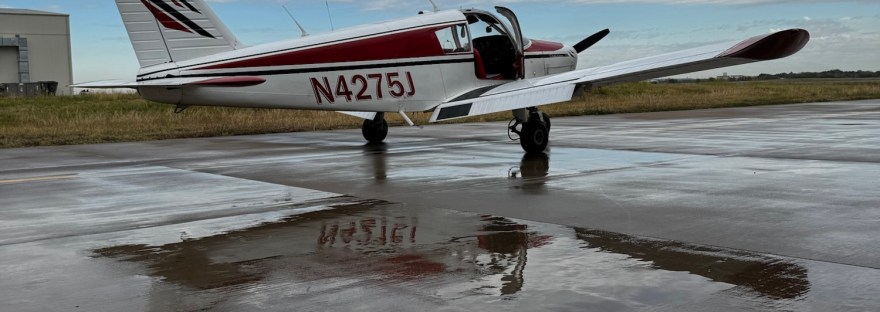
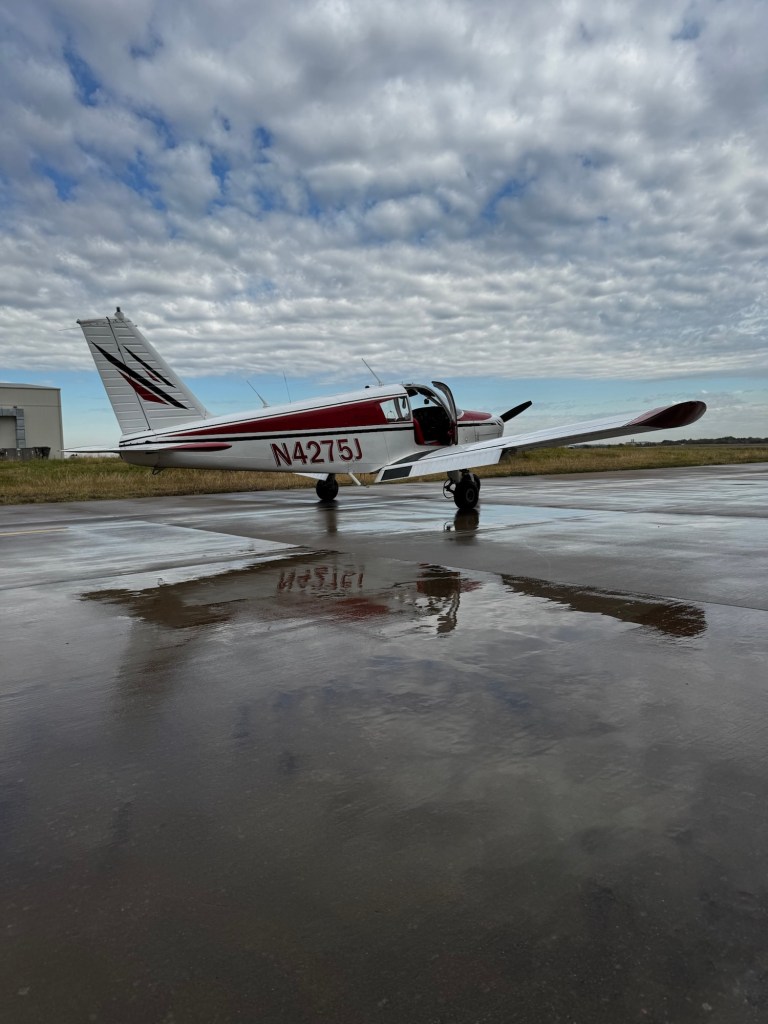
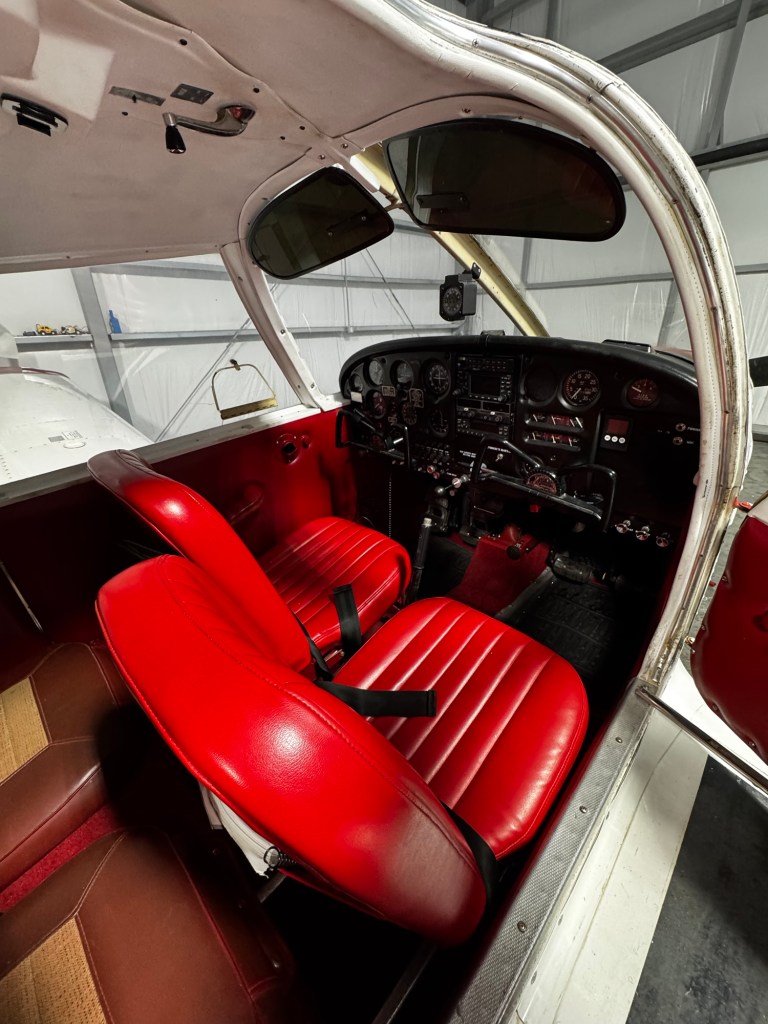
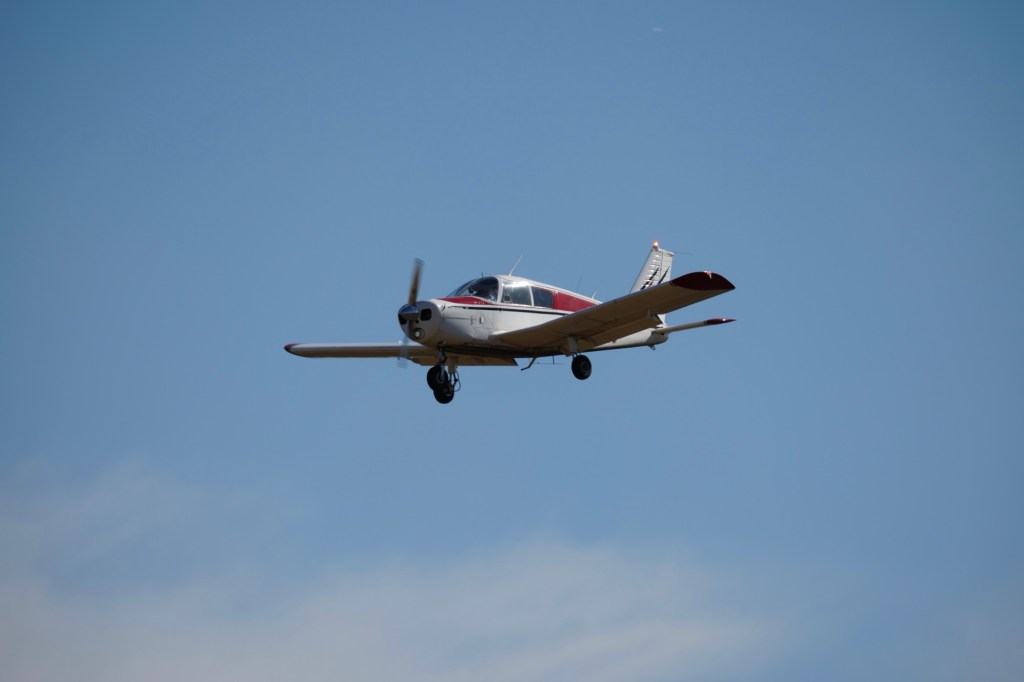
Alas, carrying that much weight for such great distances took a toll. My left shoulder began bothering me a few months ago, so I finally went in for an MRI. The imaging revealed tendonitis throughout and a small tear in my labrum. We tried several weeks of medication and physical therapy, but it’s only gotten worse. With that, I’m scheduled for surgery next month. I’m disappointed that I’ll be a bit limited in my activity for a couple of months, but relieved that I can (hopefully) be rid of the pain soon. Unfortunately, one area of my life where the injury has been particularly noticeable is flying (I’m currently working toward my PPL). A couple of weeks ago, while doing steep turns, my shoulder really hurt when I pulled back on the yoke.

Yoke

I told you the use of each word wasn’t necessarily the same. With “yoke,” The Decemberists are referring to the wooden harness used to carry or pull something, whereas I’m of course talking about the control column on an airplane. Regardless, I couldn’t help but think how strange it was that this song used the words “shoulders” and “yoke” in the same line.

I’ve gone through a lot to get to where I am today in flight training. It took roughly a year for the FAA to grant me a third-class medical certificate. It required nearly a dozen hours of psychiatric and neuropsychological evaluations, impromptu drug tests, and a whole lot of documentation. I spent about $5,000 out of pocket just to find out whether or not I could fly. During that time, I also attended ground school and passed the written exam. 

Once I got settled here in Texas, I started flight training at Fort Worth Flight School. It’s been a great experience thus far. But now, due to my shoulder pain and impending surgery, I’ve decided to take a break till next year. The plan is to resume weekly training in February and ramp it up to twice a week in March. Till now, I’ve only flown on Saturdays. I haven’t been able to fly on weeknights because it gets dark shortly after I finish working. However, come March, the days will be getting longer and Daylight Saving Time will start, giving us yet another hour to fly “beneath this bold and brilliant sun.”

Sun

When Tim and I first started planning my move to Texas, there was one thing in particular I was quite excited about: the sunlight. Back in Seattle, the dreary weather this time of year was always tough for me. I figured that a few months of sweltering Texas heat each summer would be more bearable than the seemingly endless gloom of a Washington winter. So far, so good. 

As far as I’m concerned, the sun is nature’s medicine for the soul. If I see even a glint of sunlight peeking through the darkest of clouds, my mood’s almost instantly lifted. I miss a lot about Seattle, don’t get me wrong, but the abundance of sunshine here in the Lone Star State is just one of many reasons I know I’m exactly where I need to be. 

So, next time The Decemberists say, “Don’t Carry It All,” I’m going to heed their advice. Life is too short to let relatively small inconveniences become weighty burdens. It’s too short to worry about “what ifs” or stress about the unknown. Anxiety is a beast. It’s something I’ve dealt with most of my adult life. It’s something I’ll always deal with to some extent. But that’s OK… it’s part of who I am. 

In my last blog, I mentioned a quote by G.K. Chesterton that was cited several times in the book I had just finished reading: “The Happiness Project” by Gretchen Rubin.

“It is easy to be heavy, hard to be light.”

Let me tell you… I’ll never stop trying to be light. 

Brand New

“Juggling infinity the best that I can, trying to catch it but it’s slipping through my hands.”

I just turned on “Flood” – the new album from Hippo Campus – for the first time. “Prayer Man,” the first song (and the one the above lyrics are from), immediately stirred something in my soul. The melody, the words, everything… the song is speaking to me.

The beat in track two, “Paranoid,” is infectious. I immediately want to grab my drum sticks and start jamming.

“I don’t wanna waste my time, I keep looking out for something that I’ll never find. But my fences aren’t too high, so why’s it always greener on the other side?”

That’s from track three, “Fences.” 

I’m hooked.

And the second I realized I was hooked, I grabbed my laptop to capture the experience in writing. This music had evoked all sorts of emotions, which in turn spurred a wave of creativity, and I was unwilling to ignore it. I opened my new-ish MacBook Air and realized what a point of pride this thin, metal machine is for me. Coincidentally, I had redeemed “Pride Points” at work to get the computer just a few months ago. Over the course of seven years at Boeing, I accumulated nearly 1,000 points through our employee recognition program – one point is equal to one dollar. It’s special to me, because it was my first “big purchase” as a newly single person. And even though I only spent about $100 out of pocket to get it, it still felt like a big deal.

By the time the fourth track, “Everything At Once,” hit, I had already asked a friend to go with me to the band’s upcoming show in Seattle. He agreed.

So now I sit here, listening to the mellow, catchy tunes, while feeling particularly inspired.

The last year has been a whirlwind to say the least. It felt like I’d never emerge from the dark, sad place I ended up in when Scott (my husband of 10 years, partner of 14) left me in March 2024. But I made a promise to myself that I’d be strong and resilient. And the unconditional love and support from my friends and family helped me to keep that promise. 

“Honestly, I’ve been meaning to thank you, tore me down so I can build back up again. Got you out of my mind, and I’m feeling brand new.”

As if on cue, “Brand New” – the eighth song on the album – just finished, and the lyrics above ring so true. I thought that Scott and I separating was the most “wrong” thing that ever could have happened. But in the months that followed, a few things went so “right,” it became crystal clear that everything does, in fact, happen for a reason. I am so glad he left me.

Last summer, the FAA finally added Cymbalta (the medication I take for anxiety) to its list of conditionally approved antidepressants. And that inspired me to get the ball rolling on earning my Private Pilot’s License. So, over the course of two months I spent roughly $6,000 out of pocket to undergo about 12 hours of psychiatric and neuropsychological evaluations. Completing all of that meant I could apply for my third-class medical certificate. I should know within the next six months whether it’s granted.

Sept. 6, 2024, marked our tenth wedding anniversary. Our divorce hadn’t yet been finalized, so we were, in fact, married for a solid decade. But commemorating that milestone looked a lot different than I had anticipated. Instead of being about halfway through a 10-day trip to Türkiye with Scott, I found myself at a local bar with a group of close friends. Although I wasn’t in nearly as depressed of a state as I had been six months earlier, I knew I didn’t want to be alone that day. Little did I know, the next day my life would change forever.

On Sept. 7, 2024, something happened – something I wouldn’t even know about for two more days. Someone “slid into my DMs.” On Instagram, the chat function defaults to “primary” conversations – all those you’ve already been engaged in – but there is also a “requests” section. And as far as I know, if someone whom you don’t follow sends you a message, it goes here first.

On Sept. 9, I saw a “(1)” next to “requests.” I clicked on it and saw a message dated Sept. 7 from a guy asking if I had been out taking photos at SEA that afternoon. He identified himself as a pilot and was curious if I’d photographed his arrival. While I had been there that day, it was specifically to capture an Atlas 747 charter flight. I got it and left – a classic “shoot and scoot.”

I responded to him, telling him that unfortunately I hadn’t seen his flight. We casually wrote back and forth for a few minutes, and while I still don’t know why, I felt something. 

We continued messaging – consistently, constantly – over the next few days. Before long, we had exchanged phone numbers so we could text instead of messaging through Instagram. And that Friday, Sept. 13, we talked on the phone for the first time. I consider myself awkward on the phone, so I really had to muster up the courage to take that step.

We talked for almost four hours. And from that point forward, we began talking for hours at a time nearly every day. We learned we had so much in common – we both love aviation history, we have similar taste in music, and he, too, was recently divorced. I also learned he lived in the Dallas-Fort Worth area, which meant there were nearly 2,000 miles separating us. 

Within a few weeks, we made plans for him to come visit me in Seattle. On the day he arrived, I went into the terminal at SEA and waited for him to come down the escalator. I spotted him, he spotted me, and we both picked up our pace before there was no space between us at all. 

“Almost died when you got closer, stole the breath right from my lungs.”

That’s from track 11, “Forget It,” and that’s how I felt. We hugged each other real tight, and I knew right then and there this was the start of something special.

We had four awesome days together – eating good food, hiking, exploring the city and just relaxing at home. That first “goodbye” was hard, but we both knew it was really just “see you later.” We started making plans to see each other every couple weeks. I visited him in Texas, and I started following him on some of his work trips. He came back to Washington. We were all over the place, having so much fun. And it all felt so right.

Over the course of our roughly eight months together, we’ve been through a lot. I was furloughed, faced potential layoffs, and then started reevaluating my career altogether. Working as a historian at Boeing has been such a fulfilling job for the roughly seven years I’ve been doing it. But about this time last year, things started to feel stagnant. I realized I was doing the same thing and telling the same stories most days. Moreover, there hasn’t been much opportunity for growth. I also think being single for the first time in almost 15 years helped me realize I can do anything. I’m never “trapped.”

He also faced some hardships at work. His airline filed for bankruptcy and rejected multiple merger proposals from a competitor, and most recently, the CEO resigned. Uncertainty has been abundant at both of our companies, but we’ve taken comfort in knowing that we’re never alone. 

While I’m still waiting for my FAA medical certificate, I did finally enroll in ground school. I finished the 10-week course in mid-March. As expected, my partner proved to be a very helpful tutor. More than that, his unconditional love and support helped see me through what turned into a very busy, stressful time in my life. 

I’ve still been reading – not much compared to most people, but a heck of a lot more than I used to. Most recently, I read “The Happiness Project” by Gretchen Rubin. 

I purchased the book not long after it came out in 2009, but I never got around to reading it. I remember it caught my eye one day while I was browsing in Target, and somehow just buying it made me feel smarter, more cultured and… well… more “normal.” Nevermind the fact that I didn’t open it for another 15 years. 

One key message in the book really resonated with me: what brings happiness to one person may not necessarily bring happiness to another. So, even though most of my family and friends love to read, that doesn’t mean I have to love (or even like) to read. It was sort of ironic, given I had this revelation while reading a book.

She also shares one particular quote more than once, and for whatever reason, it has really stuck with me.

“It is easy to be heavy, hard to be light.”

It’s from G.K. Chesterton’s, “Orthodoxy,” which is said to be one of the most quoted books of all time. His words leave me feeling quite contemplative. I feel like I “get it,” but I can’t quite “explain it,” if that makes any sense. 

Rubin’s book chronicles her yearlong effort to become happier – from improving her marriage to becoming more mindful, from pursuing passions to taking things a little less seriously. It was a pretty easy read for me, and I’ve already noticed myself making small changes to how I think and how I act, in an attempt to be a more joyful, gracious person. 

I’m acknowledging little things to be thankful for. For example, my 13-year-old cat Luka has had asthma for about five years now. The other day, I looked at him and said, “Buddy, we are so lucky your asthma is so well controlled with your medicine.” I just kept thinking, what if he had asthma attacks daily, or even weekly? And while he does have an inhaler (a very awkward contraption, I might add), I am beyond grateful that we almost never have to use it.

I’m being more intentional about spending time with friends. Whether it’s saying “yes” to attending a social gathering when I just feel like staying home, or reaching out to someone when I’m going to be in their neck of the woods to see if they want to grab a bite to eat.

I’m trying to avoid using negative language – emphasis on “trying.” The other day, I caught myself as I was about to refer to “this ‘dumb’ meeting.” I sighed, “… this meeting.” Really, I’m trying to put the kibosh on words like “hate” or “stupid” or “dumb” altogether. 

When Scott and I separated last year, I left all our shared belongings to him. I didn’t want to be reminded of our time together. That meant I moved into this apartment with practically nothing. One of Rubin’s big revelations during her happiness project was how satisfying it is to declutter. She even took it one step further to help friends declutter. And even though my belongings are already pretty scant, I did make one pass through the apartment and tossed several nonsensical items and gathered enough clothes to fill a trash bag for Goodwill. 

All in all, “The Happiness Project” helped me to realize just how good I’ve had it. Sure, I felt desolate and hopeless after the divorce, I complained too often about how much time and money I was having to put into medical evaluations for the FAA, and I worried like crazy that I might lose my job. But, I made it through it all. In fact, at times I considered myself to be thriving in a year that was undoubtedly on pace to become the worst one of my life.

And then, as if by some divine intervention, the love of my life seemingly appeared out of thin air. I’m not religious, so perhaps I should think of it as more of a cosmic alignment. Regardless, I got lucky. When life seemed like it couldn’t get any worse, it got damn near perfect. I know it’s not realistic to think that this sort of fairytale ending will happen for everyone facing hardship or trauma, but I guess my point is… it can happen. If my story can inspire even one person to persevere when the going gets tough, I’ll consider it a win. 

The last year has taught me that priorities can change. And honestly, I think they should change. When Scott and I moved to Seattle four years ago, things felt safe, stable and permanent. But in retrospect, I think those feelings of safety, stability and permanence led to a more all-encompassing feeling of being “trapped.” After just one winter here, I told Scott, “I don’t know if I can do this forever.” The gray, the rain, the dreariness… it got to me. The two things keeping me here were things I expected to have forever: Scott and my job. Then Scott left. And then my job started to feel monotonous.

Today, the most important thing in my life isn’t here in Seattle at all… it’s in Texas. He’s in Texas.

With that, I’ve found myself preparing for a move. Seattle has been good to me. Boeing has been (mostly) good to me. Alas, it’s time I spread my wings and embark on my next journey.

I recently accepted a position with Simple Flying as Senior Editor. To say I’m thrilled would be an understatement. When I first discovered my passion for aviation roughly a decade ago, I started researching how to make a career out of it given my skills and education. And this… this is exactly what I was looking for. I wanted to be an aviation journalist. And now I am one.

One huge perk: the job is fully remote. Not only does that make my move to the Lone Star State a whole lot easier, it means I can also travel more frequently and freely — I can work from any city, state or even country that my little heart desires.

In the 16 years since I graduated from college, my life and career have taken some strange twists and turns. But I’m sure glad things played out how they did. Everything happened just as it was supposed to. But the next few months will bring with them more change than I’ve ever experienced in a single season. And that scares me a bit.

I’m not going to be “Boeing Annie” anymore. For years, I thought that, barring unforeseen circumstances, I’d retire from this position. Most of my family, friends and colleagues associate me with Boeing history. With that, there have been (and will continue to be) some difficult conversations. Starting my new job will of course be an adjustment, too. I’ll be meeting new people, learning new systems and adjusting to the work-from-home lifestyle.

Geographically, this is going to be an adjustment of epic proportions. Ever since I moved out of my mom’s house, I’ve lived in the heart of each city I’ve called home – from Kansas City to Minneapolis, Chicago to St. Louis, and now in Seattle. Initially, I’ll be moving into the home my partner has been in for a little over a year, just outside of Arlington, Texas. Being with him is my top priority, so I’m incredibly excited and grateful we’re able to do this, but that doesn’t change the fact that walking, scooting, or taking the bus seemingly everywhere will no longer be the norm. I will say, there’s a very cute, walkable neighborhood we both like an awful lot just south of Fort Worth, and we hope to start looking for a home there sometime next year. 

There’s a lot to look forward to, but that sure as heck won’t stop me from worrying about every last detail till it’s all done and over with. All those little worries took on a life of their own one recent afternoon. I was slated to take my FAA written exam the next day, and my heart felt heavy… unbearably heavy. 

For whatever reason, all I could think to do was put on my tennis shoes and head down to the lake. The skies looked ominous, but that didn’t stop me. I walked as quickly as I could — jogging at times — as I knew rain was imminent. I made the mile-and-a-half journey in about 25 minutes. By the time I got there, it was pouring.

I walked along the beach for a few minutes before spotting the lifeguard chair. I hoisted myself up and sighed. My clothes were soaked and I could hardly see through all the water droplets on my glasses. I did a quick scan of my surroundings and there was not another soul to be seen. It was just me, the lake and the weeping sky. Before long, I found myself crying too. 

I don’t know why I needed that, but I did. After about 20 minutes, I pulled myself together, climbed back down the ladder, and started to walk home. The rain gradually let up before finally there was a break in the clouds altogether. Especially here in Seattle, I live for these moments — moments where the damp, dreary day I’ve mentally prepared myself for is transformed into one of light and vibrance. 

The smell of the sunshine warming the wet pavement reminded me just how small I am — a mere speck on this giant rock. I climbed the final set of steps up from the lake and turned around to take one last glance at the vast expanse of water. 

“Is there a rainbow yet?” I was startled by a voice that had seemingly appeared out of nowhere.

I turned back around to find a woman who was just about as drenched as I was, carrying a backpack and a yoga mat. She smiled as she awaited my response. “I don’t think so… but I’m hoping for one,” I replied enthusiastically. “Me too,” she said. We each continued going our separate ways.

By the time I got home, clouds had rolled in and rain, yet again, began to fall. I felt better. I am slowly but surely realizing that things will never be perfect — and that’s OK. But things can always be better, and I am confident that the series of choices I’ve made over the last month or so will lead to my “better.” I feel encouraged, excited and proud.

So there you have it. I’ll be in Seattle for a couple more months, soaking up what is bound to be another stereotypically perfect summer in the Pacific Northwest. And then, I’ll be packing my things and heading south to make a home with the love of my life. I’m ready.

I am so grateful to all my friends and family for giving me whatever I needed whenever I needed it — space, hugs, a listening ear, advice, criticism, etc. It all helped get me to this very point in time. I turn 38 years old in June, and I’ve never felt happier, stronger, or more loved than I do right now. It’s a really good feeling — one I’ll savor for months (even years) to come. 

Oh! As for the FAA written exam, you need 70% to pass, and I got 83%. Things are looking bright.

Mirrorless

2025 marks 10 years since I realized aviation was my calling. While out on a long walk in South Minneapolis, I unknowingly ended up quite close to MSP Airport. A plane took off right over my head and I was hooked.

I knew early on that flying wasn’t in the cards for me due to the anxiety medication I was taking, so I wasn’t quite sure how (or even if) I could pursue a career in aviation. 

I was a broadcast journalism major who had been working in news and communications for about five years. I loved storytelling — writing, making videos, taking photos — so a natural first step was to get a camera and start this blog.

I got a Nikon D3400 starter kit that came with 18-55mm and 70-300mm lenses. After a few years, my 18-55mm went kaput, so I replaced it with a used 18-140mm and also got a second D3400 body (also used) to avoid switching lenses so often. About the same time, I got the holy grail of lenses: the Sigma 150-600mm. Boy, was that a game changer for plane spotting.

Suddenly, I could photograph departures and arrivals at airports where I simply couldn’t get close enough before. I could even capture airplanes at cruising (often times being able to read the registration on the underside of the wing!). That lens also inspired me to get into wildlife photography — something I’m still passionate about.

While the D3400 served me well for nearly 10 years, alas, it was time for an upgrade. I found new homes for my old gear and got a shiny new Sony Alpha 7 IV Mirrorless with an 18-70mm lens. And without missing a beat, I got the even holier grail of lenses: the Sigma 60-600. 

This last weekend marked the first time I used the new setup for aviation photography. And what better place to test it out than LAX? As expected, it exceeded my expectations. It was a dream to shoot with and I haven’t even messed around with any settings yet. 

My absolute favorite place to take photos in Los Angeles is at Clutter’s Park on Imperial Hill. Luckily, I had the opportunity to hang out there for a bit Friday afternoon and again Saturday morning. That spot is always packed. There are of course a lot of aviation photographers, but there’s also usually a solid, diverse group of people just hanging out, enjoying the sights and sounds.

Friday afternoon, I had the pleasure of meeting a retired Royal Air Force pilot named Paul. Our conversation started with him asking me if I was getting good shots, and from there we realized our shared passion for photography and aviation. He relayed stories about flying the Tornado, and told me about the time he was able to sit in the cockpit of a British Airways 747 landing at Heathrow — those were (or must’ve been!) the days.

On Saturday morning, I got to reunite with Boeing’s former Douglas historian / archivist Pat, who had been with the company (via McDonnell Douglas) for more than 30 years when she retired in 2023. We always have a great time together, talking about our love of cats, airplanes and vintage finds. 

Pat brought me to the airport around lunchtime Saturday, where I caught a flight to Las Vegas, before continuing on to Houston. When I got to my gate, I began looking through my photos and couldn’t help but smile, thinking about how incredibly lucky I am. 

One year ago today, my life was seemingly turned upside down when my husband of 10 years told me he was leaving. For the next few months, I felt certain that the rest of my life would be filled with sadness and shame. But with the love and support of my family and friends, I was able to dig myself out of that very dark place and began to focus on the future. I wanted to be strong and resilient. I did the best I could, and believe it or not, 2024 turned into the best year of my life.

When I got my new camera last month, I started reading up on the key differences between DSLR (like my old Nikon D3400) and mirrorless (like my new Sony A7 IV) cameras. I had always heard that mirrorless was “better,” but I didn’t fully understand why. Turns out Mirrorless cameras are smaller and lighter than DSLRs, and they focus more quickly. 

But how does it work? Simply put, with a DSLR, light bounces off a mirror into the viewfinder. When you push the shutter, the mirror moves out of the way to reveal the sensor. With mirrorless cameras, light passes through the lens, straight to the sensor. 

I started thinking more about the term “mirrorless” too, and realized it was a bit symbolic of my life today. I know it’s important to reflect from time to time, but these days I’m trying my best to focus on living in the moment and looking to the future through a lens of gratitude and optimism. 

I feel confident that there’s a lot of goodness in store for me this year. I hope the same is true for you.

To blue skies and tailwinds!

A cool ‘Cat’ with a loud purr

Estimated read time: 15 minutes

The sound of the legendary Pratt & Whitney R-1830 Twin Wasp is unmistakable. It hums, it roars, it buzzes and, of course, it purrs — all the sounds you’d expect from a World War II era 14-cylinder radial engine. With 173,618 built between 1932 and 1951, the Twin Wasp is the most-produced aviation engine of all time. Its most notable applications include the Douglas DC-3/C-47, the Consolidated B-24 Liberator, the Grumman F4F Wildcat and the Consolidated PBY Catalina.

While there are hundreds of DC-3s still flying, the others are far more rare. There are only two airworthy B-24s and about 15 each of the F4F and PBY. Keeping 80-year-old airplanes flying isn’t easy. It takes a lot of time, a lot of money, and a lot of dedication. For years, I’ve been involved with the Commemorative Air Force (CAF), a Dallas-based organization that boasts the world’s largest collection of flying warbirds. Its mission is to educate, inspire, and honor through flight and living history experiences. And while they may not be as big as the CAF, there are plenty of other groups out there putting their own time and energy into preserving aviation history.

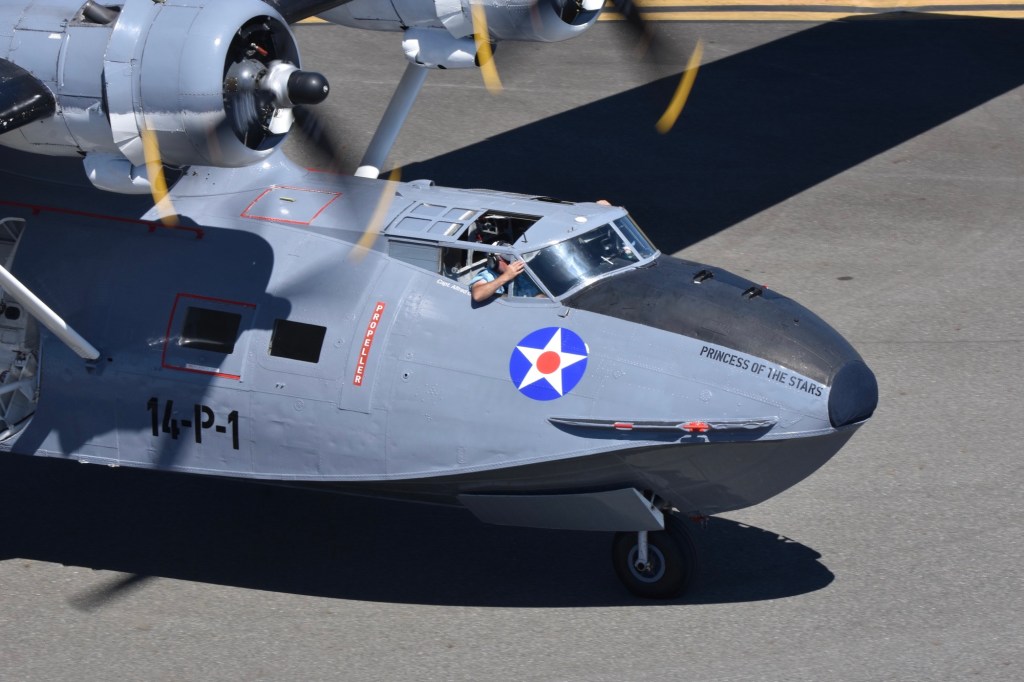
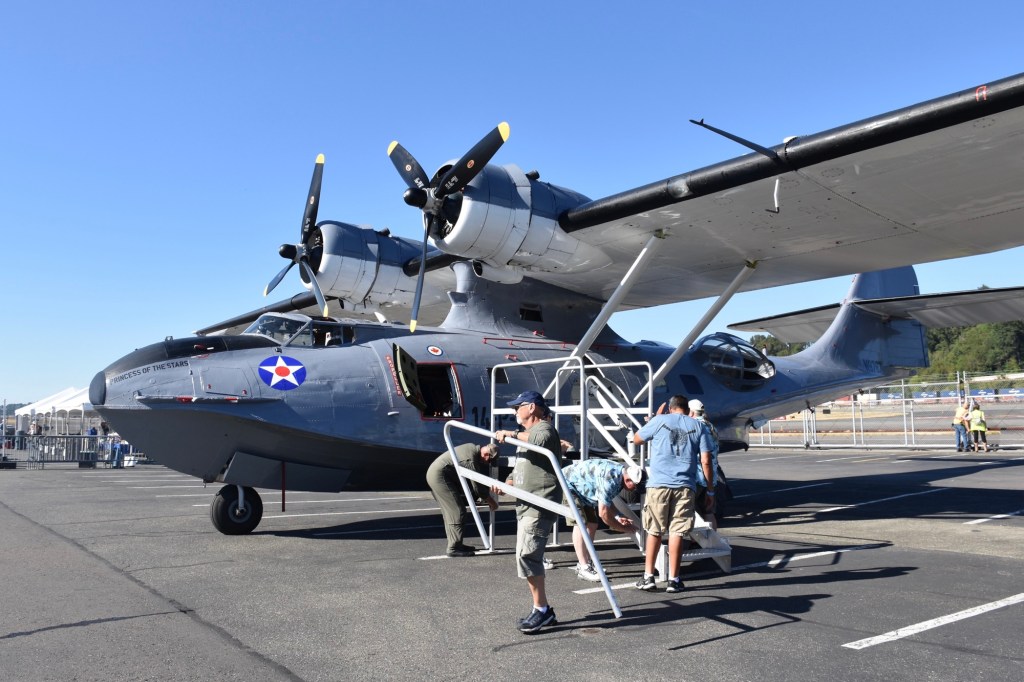
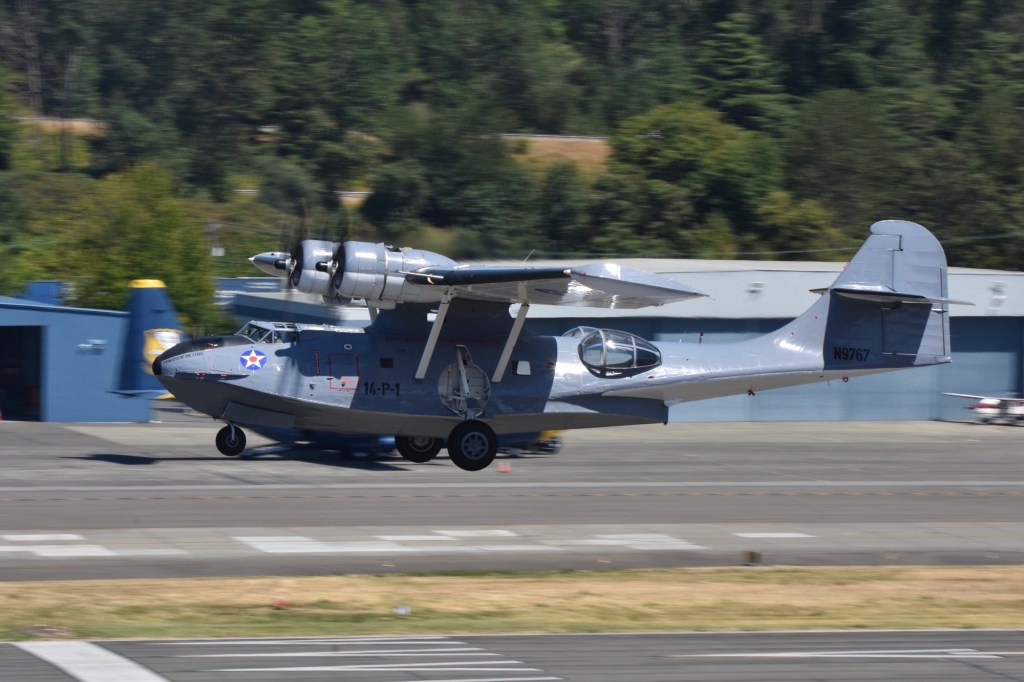
One such group is the Soaring by the Sea Foundation, an Oregon-based nonprofit that owns and operates “Princess of the Stars” — a 1943 PBY-5A “Canso” (s/n 9767) built by Boeing Aircraft of Canada for the Royal Canadian Air Force (RCAF). The British and the Americans of course called the PBY the “Catalina” (the British gave it that name in 1941 after Santa Catalina Island, which wasn’t far from Consolidated’s headquarters in San Diego). The Canadians, on the other hand, called it the “Canso,” after the strait that separates Cape Breton from Novia Scotia.

During the war, 9767 flew with No. 162 Squadron, based in Reykjavik, Iceland. In the decades that followed, it flew with several Canadian airlines before being converted to a fire bomber in 1974. In the 1990s it took on a unique role as a flying television studio based in Paris, where it received the name “Princesse des Étoiles.” Soaring by the Sea acquired the aircraft in 2019 and has been flying it in airshows ever since. “Princess of the Stars” made its second appearance at Seattle’s Seafair this year, and I had the privilege of joining the crew on their journey back home to Eugene.

For reference, an Alaska Airlines flight from Seattle to Eugene is typically operated by an Embraer 175 that cruises at a speed of 430 knots and an altitude of 27,000 feet. The flight takes about 45 minutes. The journey on “Princess of the Stars” wasn’t quite so swift — we flew at about one-third the speed and one-sixth the altitude. However, as someone who’s happiest in the sky, I’d take the PBY over the ERJ any day.

Video highlights from my flight on “Princess of the Stars”

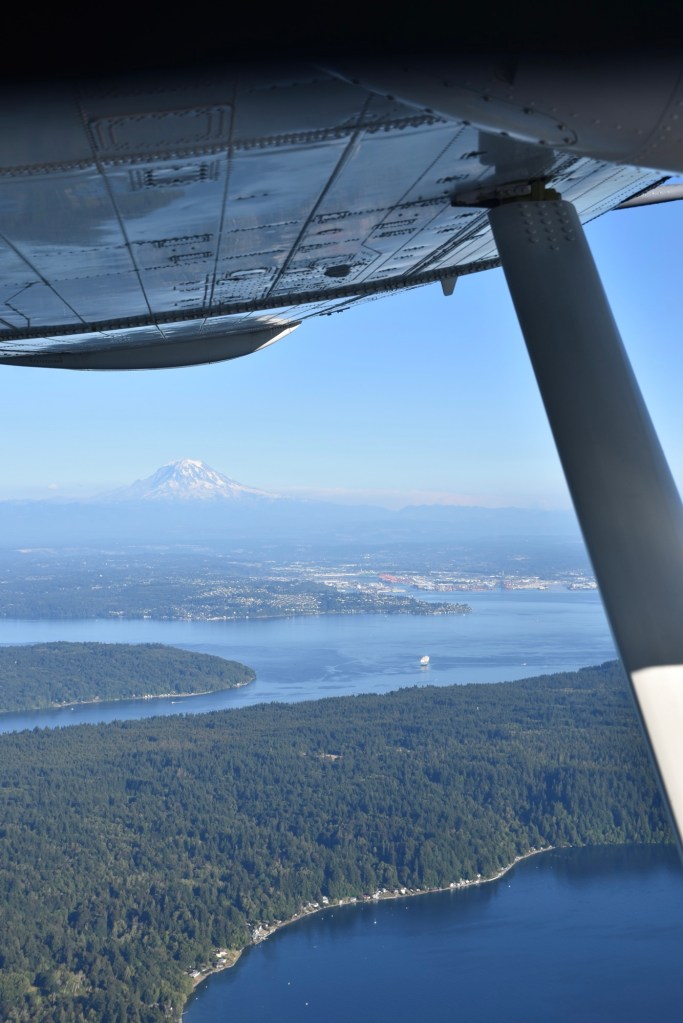
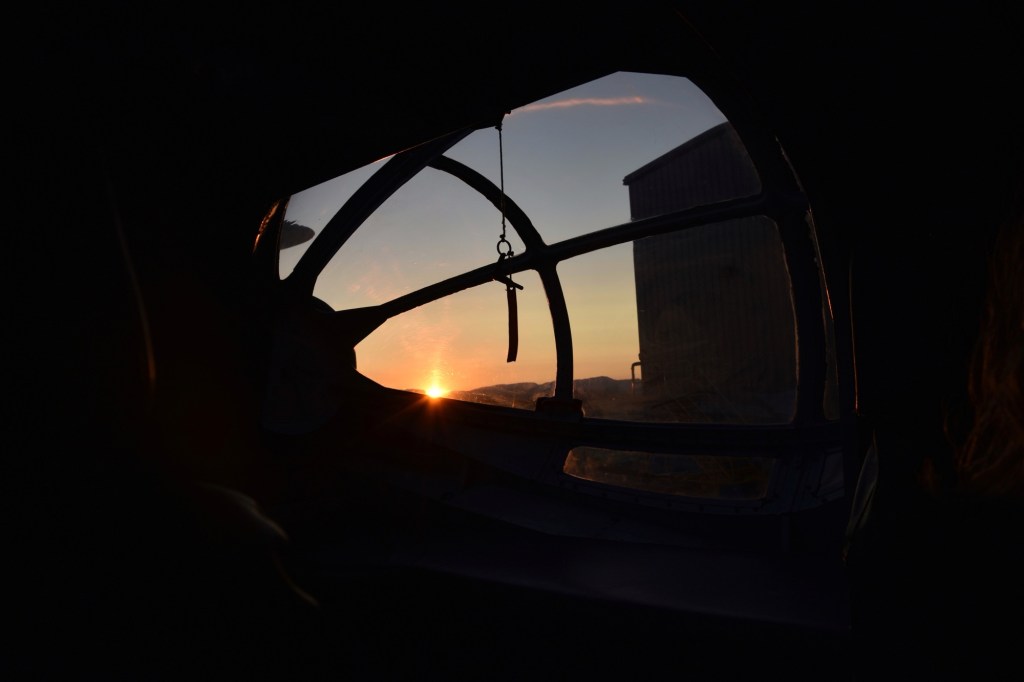
We departed King County International Airport (Boeing Field) about 6:30 p.m. We took off to the north and got a beautiful glimpse of downtown Seattle before turning south. Within 20 minutes we had reached our cruising altitude of 4,600 feet, at which point a crewmember motioned to me to get up and follow him toward the center fuselage. He pointed up, toward the mechanic’s compartment, suggesting that I climb up there. I hoisted myself up onto the small metal bench and was blown away (almost literally, as the windows were open!). Words can’t describe what it feels like to be a mile high, with fresh air coming in from either side, Mount Rainier visible out the port window, and a beautiful sunset off the starboard side. 

I then went to the rear of the aircraft to spend some time in the waist gunner’s compartment. In its current configuration, it almost felt like a lounge, with padded benches on both sides spanning the length of the blisters. It was a perfect spot to kick your feet up, put your hands behind your head, lean back and take in the views. But during the war, it wouldn’t have felt like a lounge at all — far from it, in fact.

On April 17, 1944, while conducting a meteorological “met” flight, the crew of 9767 exchanged fire with a German U-Boat before dropping depth charges that ultimately sunk it. All 51 people on the submarine died. It’s hard for me to envision what that would have been like. What would it have felt like to be inside this aircraft? What did it sound like? A quick glimpse at the RCAF “Summary of Events” from that date shows us it was cloudy and gusty, so probably a bumpy ride. In peacetime, a flight on this bird is loud, so chances are that while firing guns and being shot at, it was pretty rough on the ears even with hearing protection. 

Photo Credit: RCAF History and Heritage Directorate

Today, flying on these warbirds is such a unique, enjoyable experience for someone like myself who lives and breathes aviation history. But I always have to remind myself to take a step back, close my eyes and think back to what it would have been like in the 1940s. It’s because of these airplanes and the brave, selfless people who flew on them that I’m able to do what I do today. I will never forget that, and I hope you don’t either.

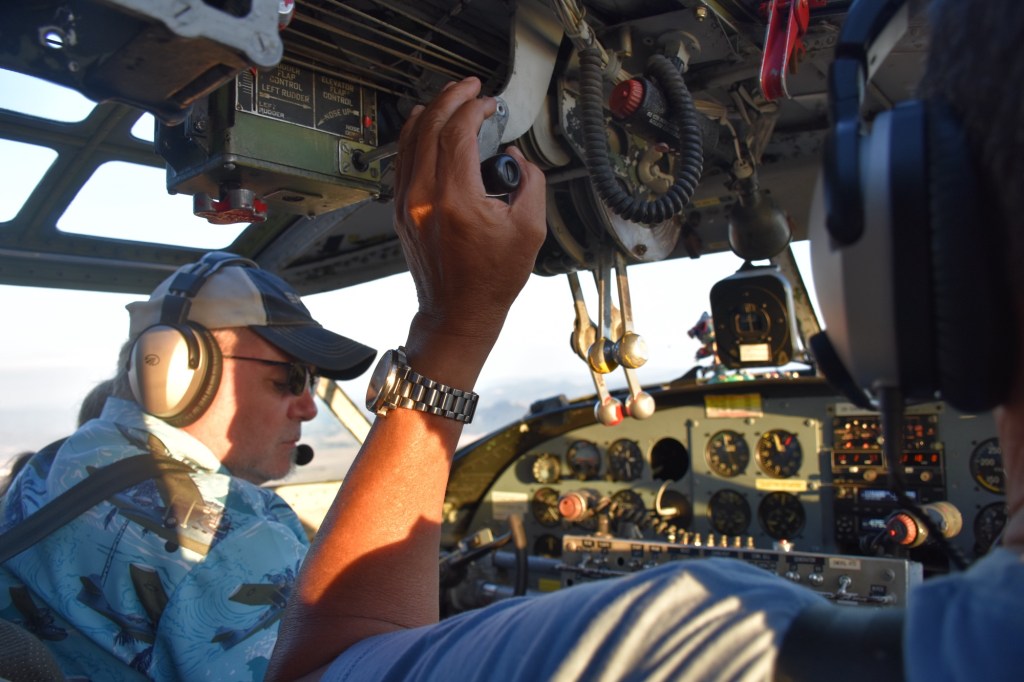
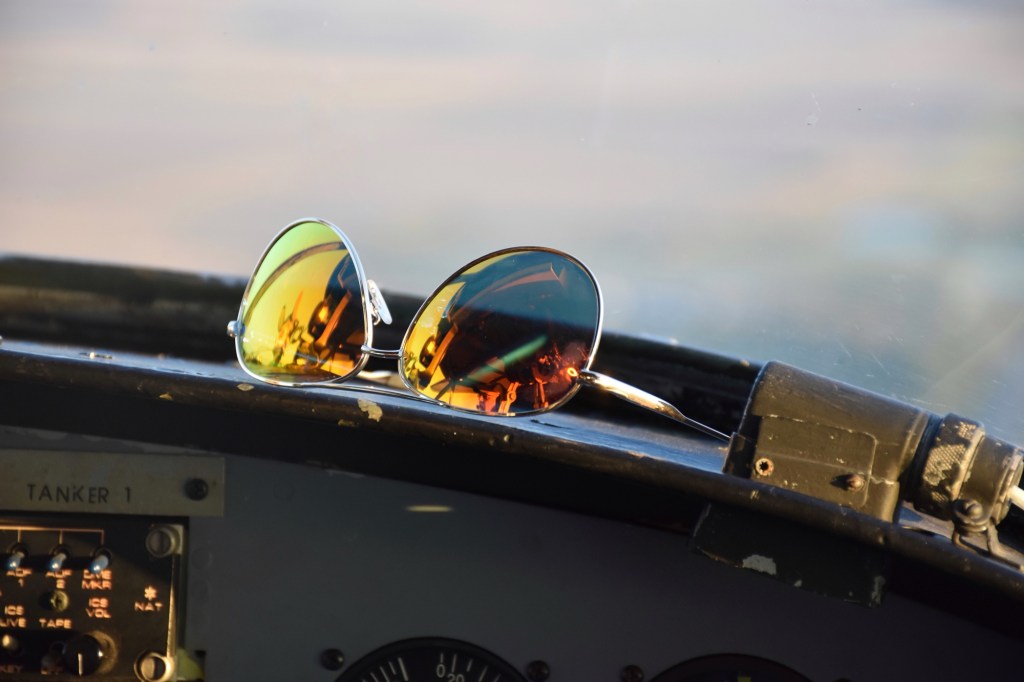
I then made my way up toward the cockpit. Without any hesitation I stuck my head in there and began snapping photos and recording video. Like many World War II era aircraft, the visibility up there was second-to-none. And the way the setting sun was illuminating the instrument panel — a soft pinkish gold — it was unreal. 

I never could have expected what would happen next.

The pilot in the left seat, Larry, got up and exited the cockpit, as the other pilot, Miguel, motioned for me to enter and take a seat. He then pointed toward the headset hanging to my left, and when I put it on, the first thing I heard him say was, “We’re going to let you fly for a bit.”

Getting my pilot’s license has been on my list for quite some time, but I just haven’t gotten around to starting the process. Up to then, my total stick time amounted to about five minutes in the rear seat of a 1942 North American Aviation T-6 Texan. I couldn’t believe I was going to add to that what turned out to be about 15 minutes on a 1943 PBY-5A. “Annie’s first yoke!”

“This takes a lot of muscle,” Miguel said. “Pull back to raise the nose, in to lower it.” I gave it a try. I was smiling ear to ear. “Now pick a spot on the horizon and try to keep it in the same spot.” I wasn’t doing too shabby, but Miguel wasn’t lying… pushing, pulling and turning that yoke was not exactly easy. However, I’ve got some pipes! And I don’t think they’ve ever been put to better use.

“Let’s try a right turn,” he said. “Slowly turn the yoke to the right, and give it a little right rudder.” I followed his command as best I could. “There you go, there you go,” he said with an uplifting tone. “Now level off.” Slowly, but surely we leveled off.

Writing about this brings me right back to that moment… pure joy. Miguel instructed me to turn back to the left to get us back to our original heading. By that time, I was convinced I was in a lucid dream. But the photos and video I captured tell a different story. Working in this industry has led me to the most wonderful people and has given me the chance to take part in some amazing experiences. My heart was (and still is!) so full.

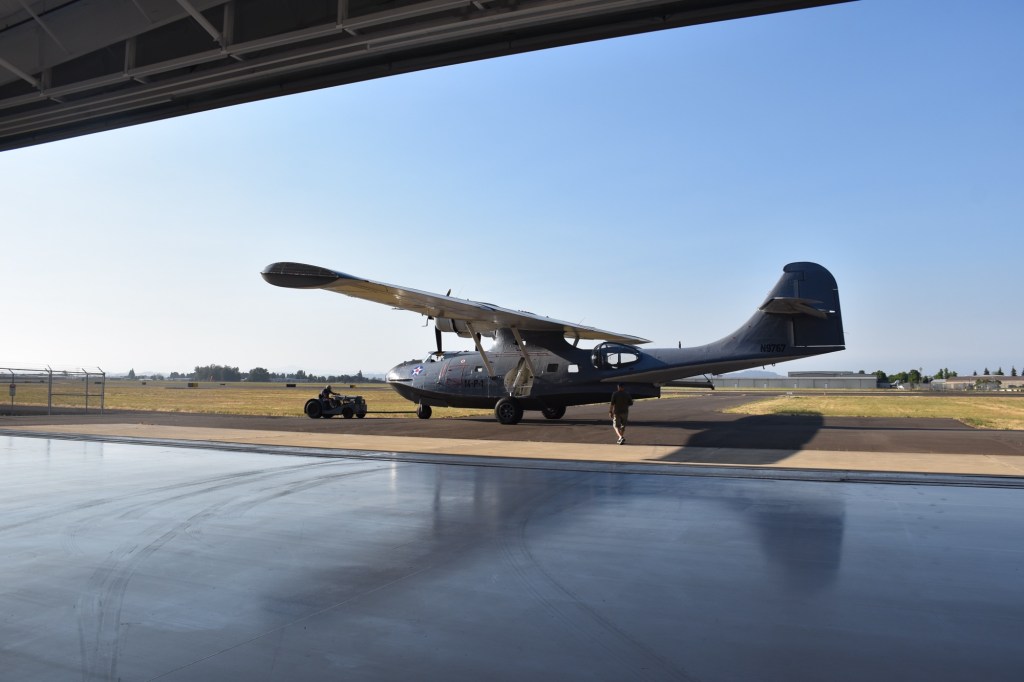
We landed at Eugene around 8:30 p.m. just as the sun disappeared behind the Coast Range mountains. The sky was pink, and everything with a reflective surface seemingly turned to gold. We taxied to the hangar, got off the airplane, and several of us stood and watched in awe as the flying boat was towed inside and tucked in for the night.

I headed to my hotel, and when I got to my room I crashed. I was still giddy with excitement, but incredibly exhausted. And after all of that, the next day was to bring yet another adventure — I needed to rest up.

My alarm went off at 6:30 a.m. and I got out of bed with a spring in my step. I gathered my things and it was off to the hangar to regroup with the crew. Today, we were doing a water flight. 

I had previously flown in seaplanes (de Havilland Twin Otters, which use floats) but never in a flying boat where the actual fuselage (hull, in this case) sits in the water. The day before, we had of course taken off from and landed at airports, meaning we made use of the aircraft’s tricycle landing gear, but today, I was going to experience the type of takeoff and landing the PBY was originally designed for.

The PBY-5A is generally considered to be the definitive model of the PBY series. The “A” stands for “amphibian,” meaning it can operate from land and water. The prior variants had no landing gear — they were strictly flying boats and required beaching gear to get them into and out of the water. In the early days of aviation, flying boats were much more common, as there weren’t many airports, but bodies of water were plentiful. Also, the PBY has phenomenal range thanks to its massive wing that’s chock-full of fuel. 

It was a crisp and cool morning as I watched the crew tow the aircraft out of the hangar, reversing what they’d done just 12 hours prior. We all put on inflatable life vests and were warned to pay close attention to the toggle, so as not to accidentally inflate it. When I got on board, there was already a gentleman sitting in the forward facing window seat on the starboard side (there are eight total passenger seats, two forward facing and two rear facing on each side). He looked at me while patting the seat next to him, “I need someone small next to me,” he said. For reference, even when he was sitting I could tell he was a very tall guy. He introduced himself as Richard.

As it turned out, Richard (a pilot himself) owns a hangar just down the street from where we were. But he had never flown on the PBY. I could tell he was excited, and that made me even more so.

Taxiing along on Fern Lake in our perfectly plump, buoyant aircraft was an adventure in and of itself. Quite unsurprisingly, the best way to describe our water takeoff was… it felt just like we were in a flying boat. When the engines powered up, we plowed through the water and it felt as though we were on a speedboat. But the water outside our window got higher, and higher, and higher still, till we could barely see a thing. And then I felt it — the undeniable lift from the parasol wing above. Just as we hit 85 knots, this beautiful beast wanted to fly. And fly she did.

Landing on the water was perhaps the most memorable part of the flight — it almost felt like a controlled crash. It was so loud and so jarring, yet so quick. Next thing I knew, there was barely a sound except for the sloshing water outside, which got quieter as we slowed down.

After the flight, we disembarked and I took one last look at the sleek, elegant machine that had brought me up to my happy place and safely back down to the real world. I then got to talking with Richard, and he invited me to his hangar to take a look at his airplanes.

When we entered, two things were clear. First, this guy loves to fly. Second, he loves a good project (or 10).

Inside, there were so many airplanes — including a stunning jet black Short Tucano (a license built version of the Embraer 312 Tucano, of which he also has two flying examples) — as well as several fuselages and other airplane parts just waiting to be brought to life. Turboprop trainers from France and the U.K. seemed to be his speciality. Richard is British, but has lived in the U.S. for 40 years now.

What I learned next about him put all my other “small world” stories to shame.

I casually mentioned having a bad knee due to running as a kid and young adult. “My wife’s a runner,” he said. I didn’t think much of it.

We then went into his office, and he pointed to a photo and said, “That’s my wife, her name’s Mary… you might recognize her maiden name, Decker.” The photo showed a woman who was clearly more than a casual jogger. The name sounded so familiar, too. I knew I’d better hit the road, so Richard brought me back to my rental car. I put the pedal to the metal and drove the entire 4.5 hours from Eugene to Seattle without stopping.

When I got home, I sat on the couch, opened up Safari on my phone and Googled “Mary Decker.” 

“Whoa…” I thought.

Not only did she run in the 1984 Olympics in Los Angeles, her husband Richard Slaney (yes, the Richard with whom I had just visited!) competed in those very Olympics as a discus thrower. Mary was favored to win gold in the 3,000 meter race, but unfortunately she and another runner collided and she didn’t finish the race. Some very famous photos emerged from that incident, including one of Richard helping her off the track.

Today, Richard and Mary are happy and well, living on a 55-acre ranch in Eugene with a lot of animals, including dogs and chickens. They have one daughter about my age.

My dad was an accomplished runner himself, so I couldn’t wait to tell him who I had met. I gave him a call and recounted my time in Richard’s hangar, and from his audible gasp I knew he had a story to tell. It turns out, he and my mom were at the 1984 Olympics. Not only that, they were at the women’s 3,000 meter final and watched that painful incident unfold in real time.

This is just another example of the often strange ways aviation connects us. It truly is a small world.

So, with that, I’ll close by expressing my immense gratitude to the Soaring by the Sea Foundation for allowing me to fly on this stunningly massive, bulky (yet graceful) piece of aviation history, and for the incredible work you do to preserve it.

Thank you also to Richard, for your kindness and hospitality in Eugene and for allowing me to share a bit of your story as well as that of my parents and the ‘84 Olympics.

I’m sure most who made it this far also read my previous blog: The sun shines different now. For me, this year started off rough, but I continue to do my best to stay positive and optimistic. While I was writing this, I couldn’t stop singing “Times Like These” by the Foo Fighters. The lyrics really resonate with me. And my experience on “Princess of the Stars” turned that resonation into a powerful lasting reverberation.

I’m a new day rising,
I’m a brand-new sky to hang the stars upon tonight.
I’m a little divided,
Do I stay or run away and leave it all behind?

It’s times like these you learn to live again,
It’s times like these you give and give again.
It’s times like these you learn to love again,
It’s times like these time and time again.

For more photos of this remarkable aircraft, visit my Flickr: PBY “Princess of the Stars”