Our Moon

I can tell just by looking out the window that the air outside is warmer than the air in my living room.

And no matter how hard I try — no matter how captivating the television dialogue is and no matter how loud my cats meow to try to get my attention — I can’t take my eyes off the Moon… our Moon. It feels like there’s a magnetic force between the two blue orbs protruding out of my head and that one massive, majestic orb hanging in the sky… and I don’t know why, but it’s so strong.

The sun shines on it and it glows golden and more vivid with each minute — but I know that without that massive ball of fire there to light it up, our Moon is just a gray, rocky, dusty satellite. That’s it.

Sometimes I wish we had more than one moon. I wonder what the sky would look like at night if we had two moons like Mars. I wonder what it would look like during the day if we had 60-some moons like Jupiter or Saturn. I know how excited I get when I notice mid-afternoon that the small, round, seemingly perfect cloud I’ve affixed my eyes to is actually our Moon. What if I saw dozens of them all at once?

But then, as night falls and the Moon gets higher and brighter — almost pure white against the dark blue sky — I realize just how much I love our one Moon. Of the eight planets that orbit our sun, there are two that don’t have any moons (Mercury and Venus), there’s one that has two moons (Mars), one that has 14 moons (Neptune) and one that has 27 moons (Uranus), there are two that have more than 60 moons (Saturn has 62, Jupiter has 67), but there’s just one planet that has only one moon… and that’s us: Earth.

How different would the space race have been if we had multiple moons? What would the space race have even been if we had no moons at all?

As the 50th anniversary of humankind’s first lunar landing approaches, I’m so thankful for Earth’s one and only satellite: our Moon. And knowing that 2022 will mark the 50th anniversary of the last human foot leaving that crater-filled ground… I’m so anxious and hopeful to see what the next generation of lunar exploration holds — for Americans and for the world.

Photo: NASA
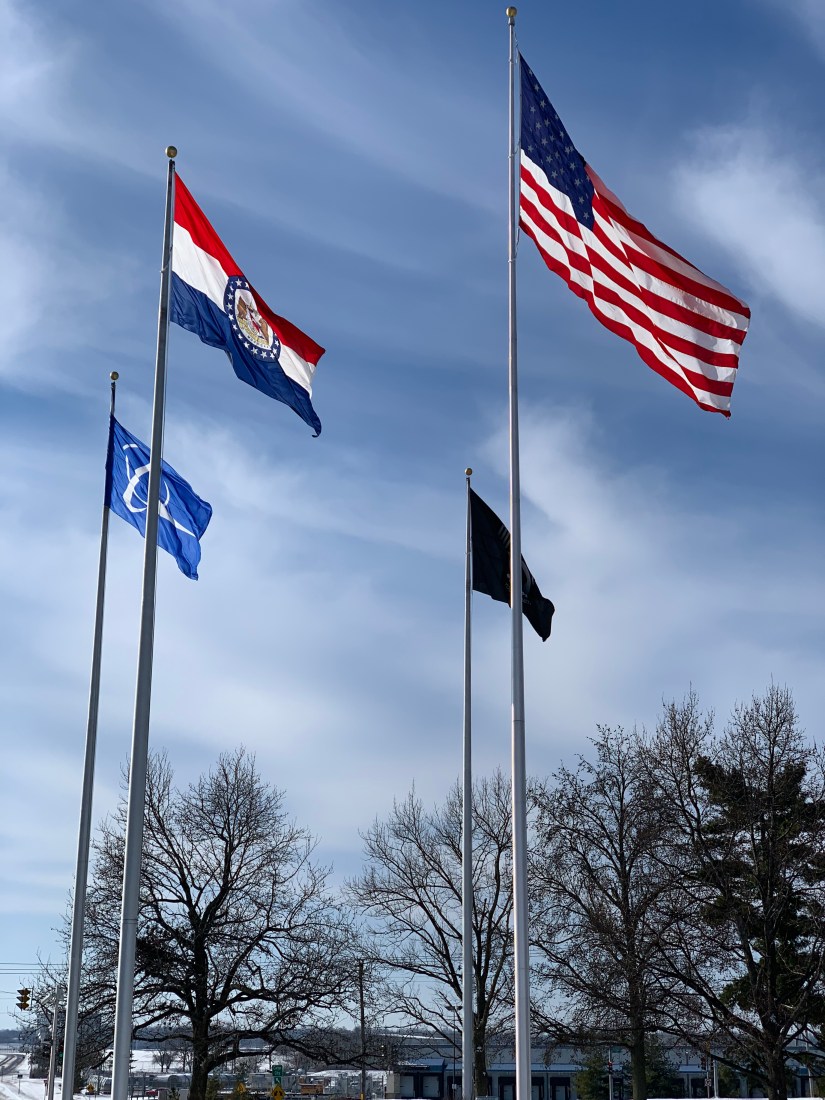
“Whoosh!” Time flies… and so do fighter jets.

Yesterday afternoon as I was leaving the office, something incredible happened. I exited the building alongside several other employees—all of us making our way down the sidewalk toward the parking lot. That walk typically feels endless, but on a sunny, 60-degree day like yesterday, everyone seems to enjoy each step a little more. Just seconds after the automatic sliding doors closed behind me, a loud “whoosh!” caused all of us to quickly turn our heads to the right.
An F/A-18 had lifted off runway 12L at St. Louis Lambert International Airport so quickly that I barely caught a glimpse before it became the size of a fly above the eastern horizon. And as it disappeared, another “whoosh!” really got our attention. We all watched a second jet disappear into the clouds… and then “WHOOSH!” — a third and final one sped into the blue spring sky.

Most of you know that my fascination with flight tends toward commercial airplanes, however, I think I’ve got a decent bit of military aviation in my bones. After all, my familial ties to the industry involve both my dad’s decades-long career as a navigator in the U.S. Air Force, and my parents having met as flight attendants on Eastern Airlines.

In St. Louis, Boeing is much more defense-focused, as has been the case since McDonnell first began operations here in 1939. James McDonnell’s company was best known for its fighter jets and—of course—its spacecraft. The first American in space, Alan Shephard, left Earth’s soil and blasted into the black, vast unknown aboard the McDonnell-built single-seat Mercury space capsule.

It’s been three months since I left the Windy City for a new opportunity here in the “Show Me” state, but still, I so vividly remember the way I felt each time I approached Boeing’s world headquarters in Chicago. Starting down at street level, my eyes would slowly make their way up to the apex of our 36-story building. I’d inhale, and slowly exhale… in utter disbelief—but with the utmost gratitude—that I was working for the greatest aerospace company on the planet.

I was.

And I still am.

Boeing and its heritage companies (North American, Douglas and, of course, McDonnell) have such remarkable pasts… to think that I’ve been tasked with helping to preserve that history is beyond me.

Flight has the ability to captivate each and every one of us, young and old. Whether it takes you a few feet off the ground, or all the way to the Moon, to fly is something purely magical—there’s no denying it.

And that’s how it should be.

There is always something new—something bigger and better out there. So it’s up to us to go explore, discover and unleash the future. And I’m so thankful to be part of a company that works to do just that every day.

Flying the Feathered Edge

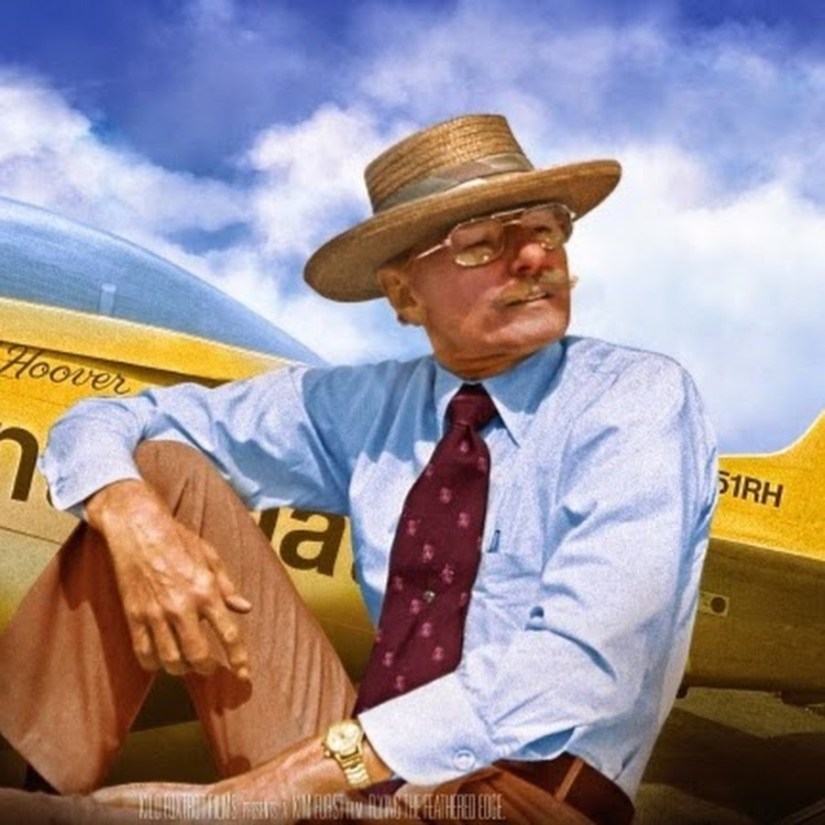
R.A. “Bob” Hoover, as seen on the cover of the documentary detailing his astounding career.

“Each time I did see an airplane — and there weren’t too many flying back in those days — I’d stop whatever I was doing to watch it until it went out of sight. All I could think about or want to read about would be airplanes and aviation.”

Those words were spoken by R.A. “Bob” Hoover himself during an interview for Flying the Feathered Edge: The Bob Hoover Project, a documentary highlighting the remarkable life and legacy of the man often called the greatest pilot of all time.

My favorite thing about Bob is that his friends and former military comrades say he was “always up to something.” Example: He was shot down in World War II, spent more than a year in a prison camp, escaped, stole a Focke-Wulf F190 (the very plane he was shot down by) and flew to safety in The Netherlands.

Years later, he worked as a test pilot for Boeing heritage company North American Aviation. From the FJ-2 Fury to the F-86 Sabre and F-100 Super Sabre… he flew ‘em all.

In the ‘60s, he began flying the can’t-be-stopped P-51 Mustang in airshows. Often called “a pilot’s pilot,” his post-war aerobatics career lasted almost 40 years.

In watching the movie, I of course was enlightened as to what a remarkable pilot and person Bob was (he unfortunately passed away in 2016), but I also realized how many museums are out there housing artifacts and relics from his and other notable pilots’ careers… museums I’ve never been to. From the National Air and Space Museum in Washington, D.C., and its annex, the Udvar-Hazy Center at Washington Dulles, all the way across the country to the San Diego Air and Space Museum… heck, I’ve never even been to the Museum of Flight in Tukwila, Wash.

So, in summary: Annie has a lot of places she needs to go, and everyone needs to watch Flying the Feathered Edge.

And… Scene.

I Got Friends in High Places: A Tow-tally Awesome Day at MSP

I feel so fortunate that my love of big metal birds has brought such a unique sense of purpose, fulfillment and happiness to my life. It’s also introduced me to a new group of lifelong friends who share my passion for aviation—one of my very favorites is Joe, an air traffic controller at MSP tower.

Our paths first crossed via Instagram and before I knew it, I was up in the tower with Joe, witnessing firsthand the controlled chaos that is air traffic control. Fast forward a few months and my husband Scott and I got together with Joe and his wife Tina (also an incredibly awesome person) at Holman’s Table at the Downtown St. Paul Airport, which was brand new at the time. We were even fortunate to visit with them in Chicago a couple months after I had moved down there for my job with Boeing.

Every chance I get, I like to connect in person with fellow aviation enthusiasts. I’ve been lucky enough to meet a handful of my Instagram followers—several up in Minneapolis and even a couple in Chicago and one in Baltimore (gotta give a quick shout out to Robert and Tam Tam… HEY!). So, naturally when I scheduled a weekend trip up to Minnesota, I reached out to Joe and he graciously invited my husband Scott and I up to the tower—Scott had never been.

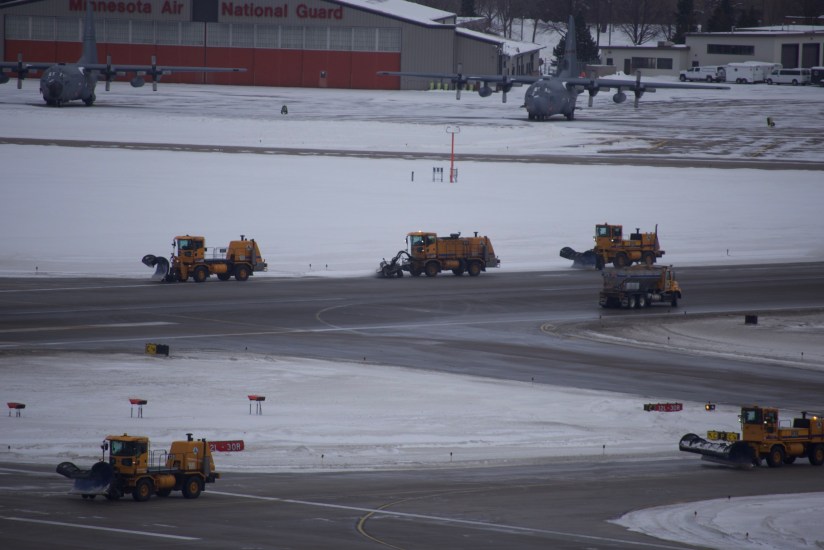
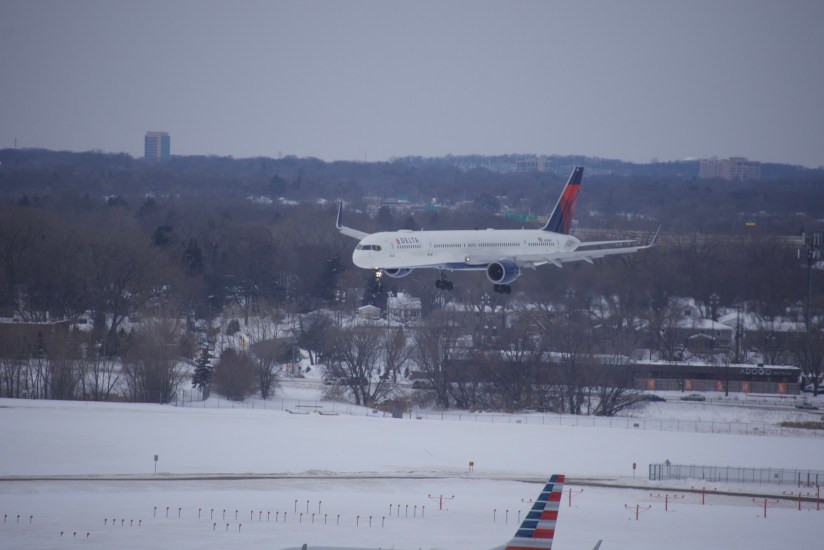
Joe talked through some of the ins and outs of what exactly the controllers do on a day-to-day basis, and I—of course—enjoyed some quality time on the catwalk snapping photos of the airfield. I even caught the snow plow conga line!

Earlier that day, Joe had enlightened us to the fact that he had a “surprise” planned that afternoon. Any plane-related surprise is a great surprise… but I had NO idea what a tow-tally awesome experience we were in for.

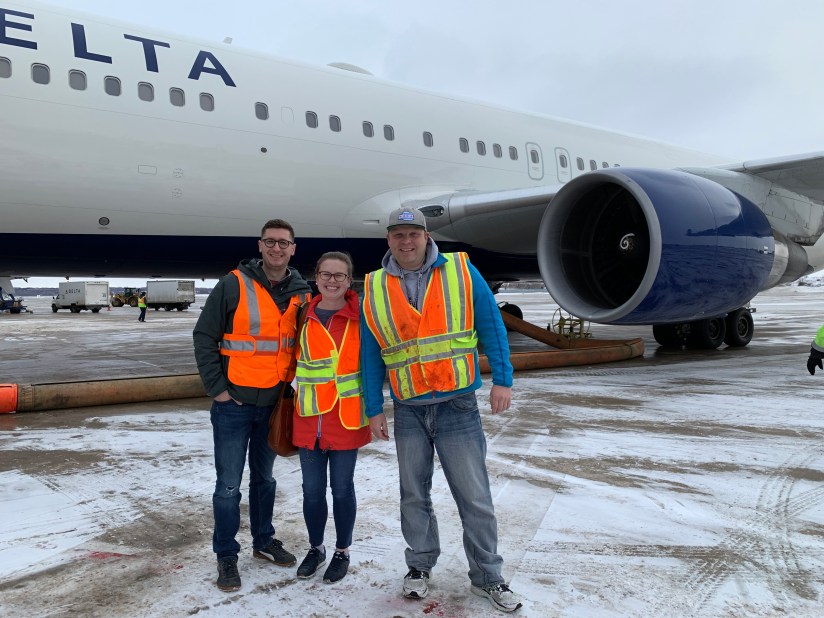
“Alright, you ready? Let’s go,” Joe said. Scott and I followed him down the stairs, exited the tower and walked over to a pickup truck where we met an incredibly kind Delta employee named Kyle. The four of us hopped in the truck and drove around the airfield. We crossed runways and cruised through tunnels before pulling up to a beautiful, beastly Delta Boeing 767. We were about to tow that sucker using the Super Tug.

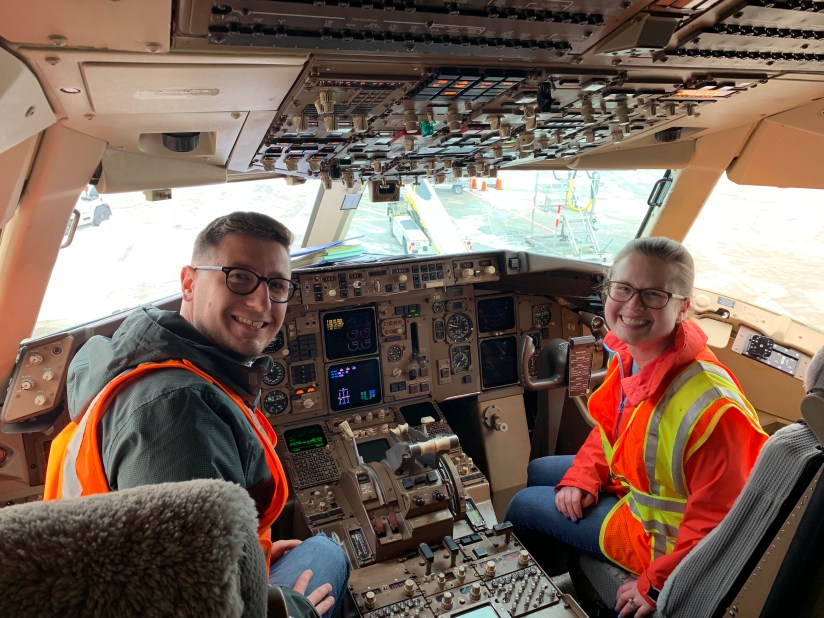
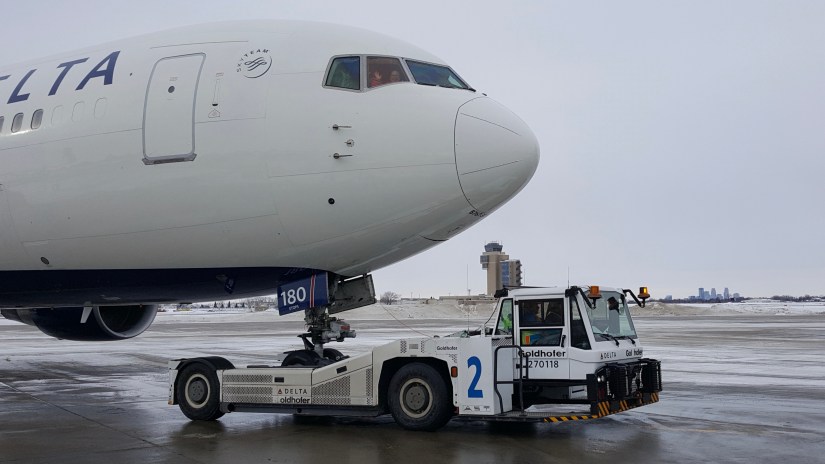
Scott and I hopped inside the cockpit, and he took the jump seat while I played first officer. And yes, a legit Delta employee manned the ship from the captain’s seat. Joe got into the Super Tug and before I knew it, its powerful arms had grabbed hold of our nose gear and raised it a whopping foot-and-a-half off the ground! Then, that powerful little whipper snapper pulled us to a new gate like it was nothin’.

After that, we got to do the same thing, but this time in a BRAND new A321. We switched things up a bit, Scott rode along in the Super Tug, and Joe and I went along for the gate-to-hangar ride in the cockpit. Of course I’m partial to Boeing planes, but let me tell you… the new-plane smell of this A321 and it’s shiny, barely-touched cockpit were incredible.

I live for these types of experiences… it’s really something to spend even a few minutes in someone else’s shoes, much less an entire afternoon. There are so many people, companies and organizations that keep or skies safe and our airports running—I’m grateful for every chance I get to learn a little more about each.