I landed my first full-time job — assignment editor at KCTV in Kansas City — in August 2011. Yes, it took me more than two years after graduating from college to find a 40-hour-a-week gig in my field, but I did it, and I was more than willing to make the nearly 450-mile move to begin that new chapter in my life.
During the 15 months that Scott and I lived there, I hadn’t yet realized my passion for aviation. In fact, I was straight up terrified of flying — every second I spent on an airplane was an anxiety-inducing nightmare filled with sweat and tears (luckily no blood).
Not long after moving back to Minneapolis, I was out jogging near MSP Airport when an airplane lifted off of runway 17 right above me. I looked up and watched it grow smaller and smaller, until it was no more than a speck in the gray autumn sky. That moment changed my life — I decided to face my fear of flying head-on.
I started seeing a counselor for my anxiety, spent as much time as I could out at my new “happy place” (the airport) and began educating myself on the physics of flight, which helped me to look forward to — not dread — flying.
Throughout this personal transformation, I realized how big a part of my life aviation had always been. My dad served more than 30 years with the U.S. Air Force, and my parents met as flight attendants on Eastern Airlines. To this day, both my mom and dad are “AV geeks” in the truest sense, and if it weren’t for Eastern bringing them together, I wouldn’t be here today.
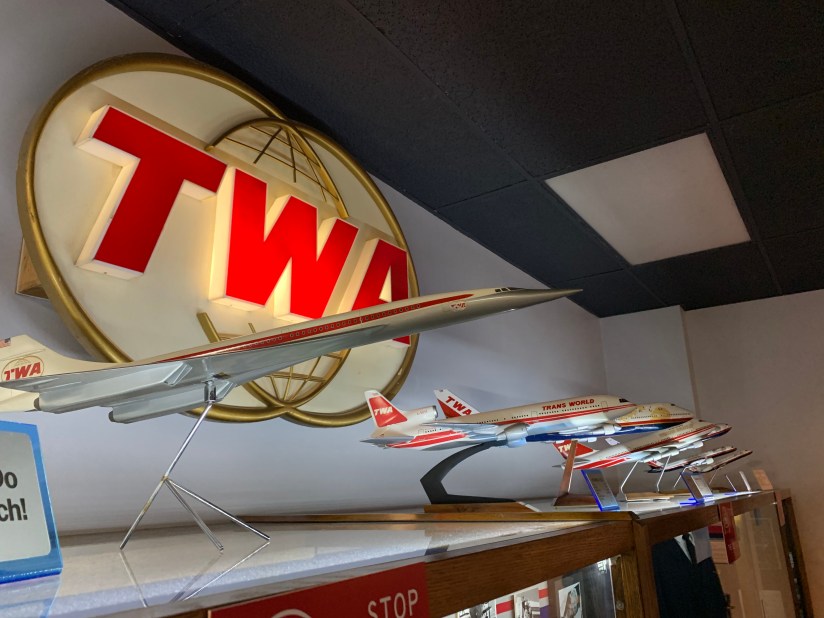
It was through my parents’ own stories about their time as flight attendants that I realized how much of a family affair the airline industry really is. There is an undeniable, inextricable bond between an airline and its current and former employees. From pilots to flight attendants… mechanics to ground crews… it seems that most people who work for an airline have a unique love for their employer — one that endures the ups and downs, the mergers and acquisitions, the dreaded bankruptcies and everything in between. That’s certainly the case with my parents and Eastern, and it seems to ring true with the former employees of TWA too — especially those who now volunteer at the airline’s museum at the Charles B. Wheeler Downtown Airport in Kansas City.
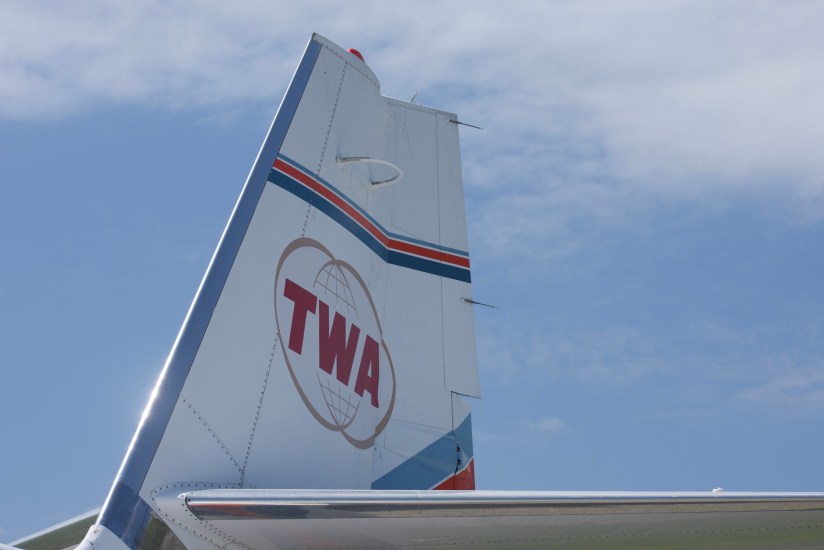
Like Eastern, TWA was one of the earliest commercial airlines to be founded in the United States. It started as Transcontinental & Western Air in 1930 and became Trans World Airlines in 1950. The airline endured until 2001 when it was acquired by American Airlines.
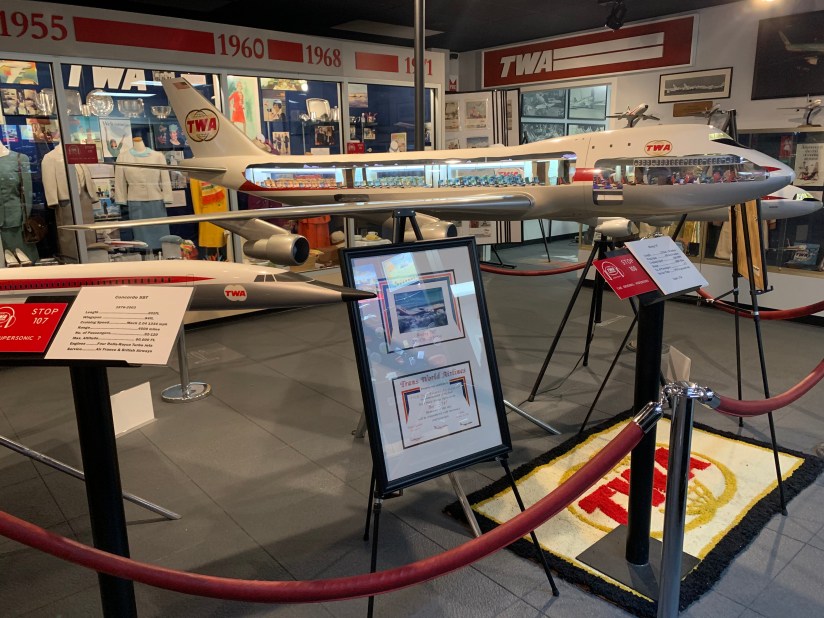
Just about 88 years ago, TWA relocated its headquarters from New York to 10 Richards Road in Kansas City. Fittingly, that’s where the TWA museum opened in June 2012, marking the fifth and likely final location for the volunteer-run exhibit that houses artifacts spanning seven decades of aviation history.
TWA holds a special place in my heart, as one of my favorite airplanes — the Douglas DC-3 — came to be because TWA needed a new airplane. The airline had grounded its Fokker F-10s after one was involved in a tragic crash that killed all eight on board, including esteemed Notre Dame football coach Knute Rockne. Unfortunately, the first 60 Boeing 247s were all going to United Airlines, but that turned out to be a blessing in disguise. TWA’s president, Jack Frye, made a call for a new aircraft and ultimately selected Douglas, who built the DC-1, which evolved into the DC-2 and then the incredible workhorse DC-3. The DC-3 was the first airplane to make money simply by flying passengers, and is regarded by many as the greatest airplane of all time.
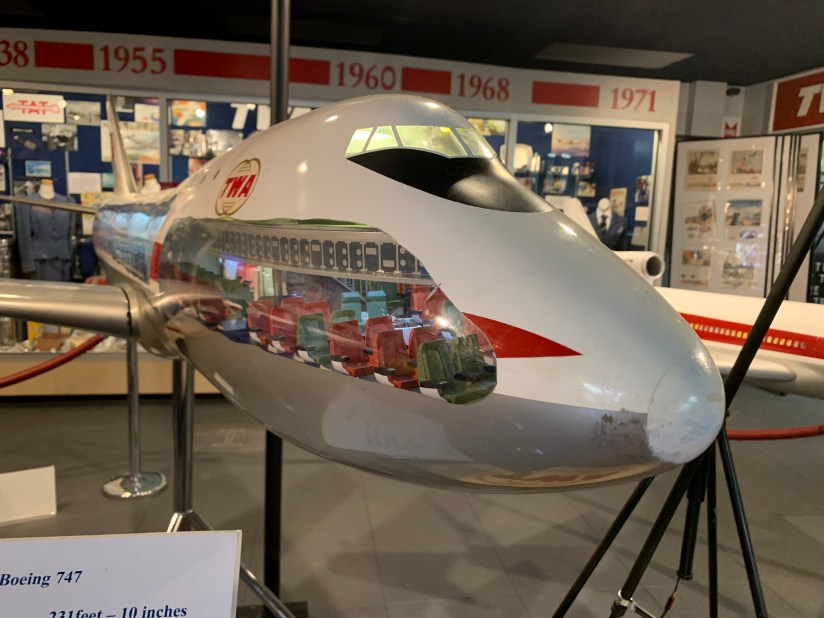
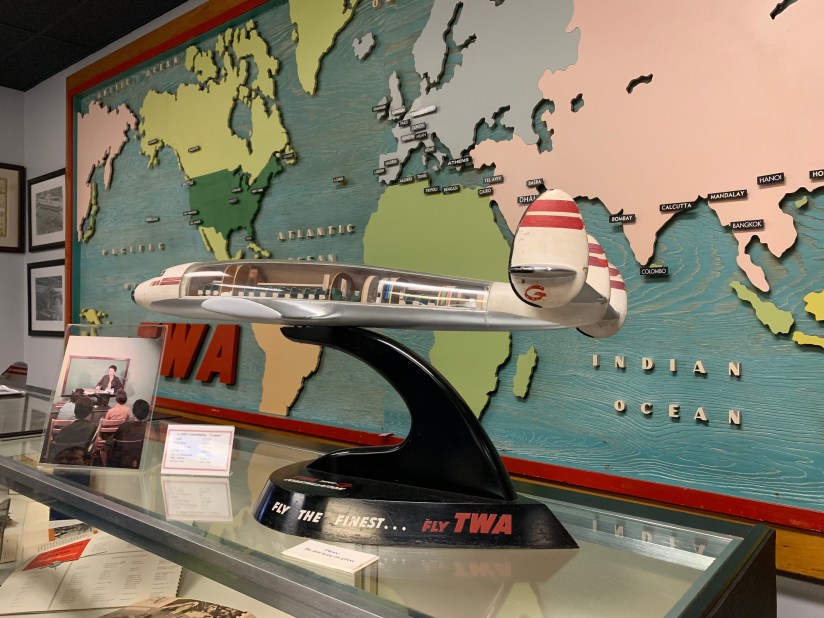
Later, TWA requested a bigger, more efficient airplane which led to the development of the Lockheed L-049 Constellation or “Connie” — the triple-tail, four-engine prop plane quickly becoming a TWA icon. Into the Jet Age, TWA flew the Boeing 707 and later the famous “Queen of the Skies” Boeing 747.
In 1988, with its Boeing 747s and 767s, and the three-engine Lockheed L-1011 Tristar, TWA “peaked” in a sense — carrying more than half of all transatlantic passengers. Fun fact: Today marks 100 years since the world’s very first transatlantic flight. On this day in 1919, the U.S. Navy’s Curtiss NC-4 flying boat landed in Lisbon, Portugal after a nearly three-week stop-and-go flight from the U.S.
The 1996 crash of TWA flight 800 really left a permanent scar on the airline. On the evening of July 17, flight 800 departed New York’s JFK Airport headed to Paris and ultimately to Rome, but a center-fuel-tank explosion caused it to crash into the Atlantic Ocean, killing all 230 people on board. The airline flew its final flights — both revenue and ceremonial — on Dec. 1, 2001. The MD-80 used in the ceremonial final flight now rests at the TWA Museum.
“The mission of the TWA Museum is to provide information to the public emphasizing the story, history and importance of the major role TWA played in pioneering commercial aviation.
From the birth of airmail to the inception of passenger air travel, to the post-WWII era of global route expansion, TWA led the way for 75 years.”
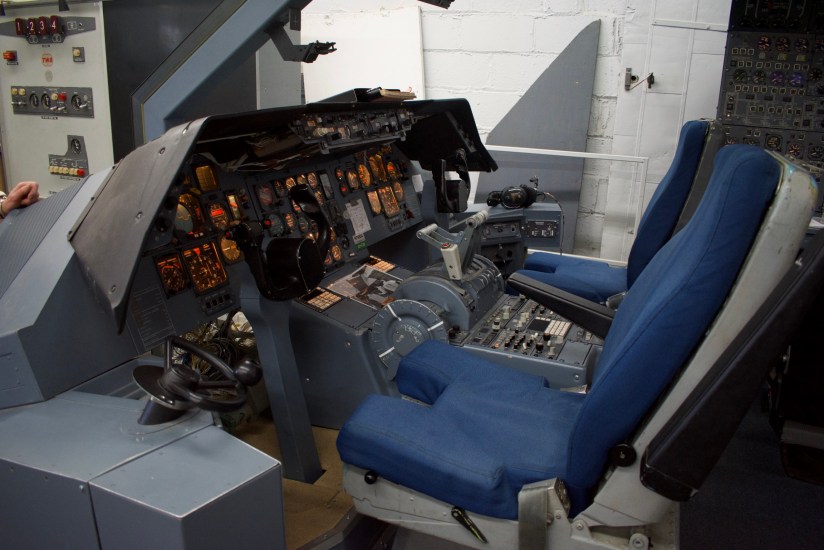
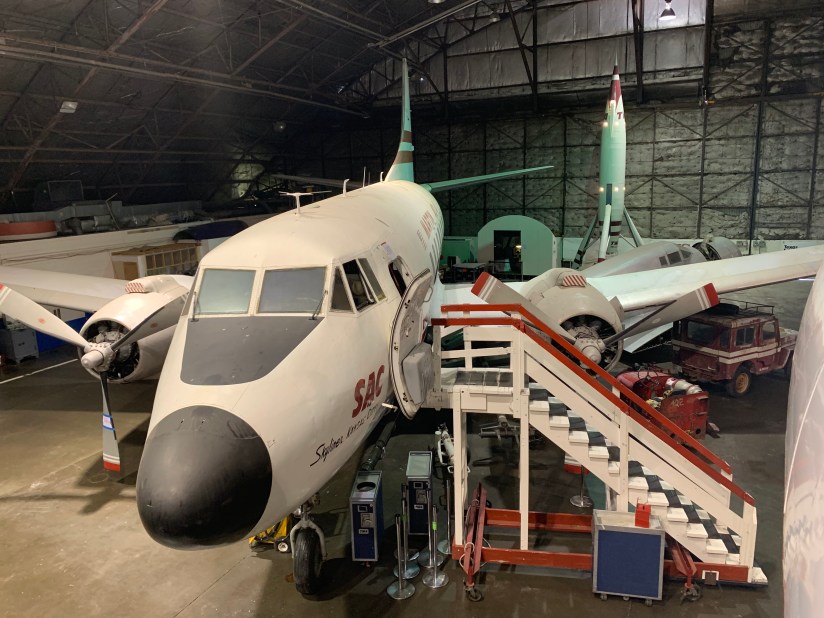
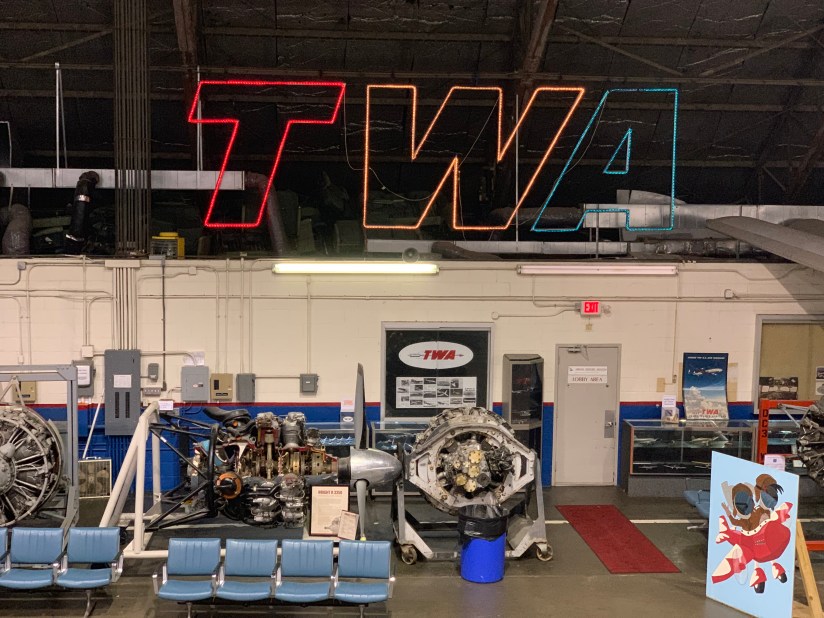
This intro to the “About Us” section of the museum’s website very accurately captures the overall vibe of the exhibit itself. These days, it’s not often you can learn history firsthand from people who lived it, but that’s what sets the TWA Museum apart. Honestly, I’m still not sure what I enjoyed more — actually seeing the models, photos, equipment and other historical artifacts, or witnessing the pure, unfiltered joy among the former employees who are tasked with keeping the TWA story alive.
To all my AV geek friends, I highly — and I mean highly — recommend you visit the museum next time you’re in the Kansas City area. In and of itself it’s an incredible experience, but factor in the location (IT’S AT AN ACTIVE AIRPORT!) and the fact that just across the airfield is another great tourist attraction: the National Airline History Museum, which boasts more artifacts and a huge hangar full of iconic birds. Make a day of it — trust me, you won’t regret it!
To blue skies and tailwinds…



































































 Yesterday afternoon as I was leaving the office, something incredible happened. I exited the building alongside several other employees—all of us making our way down the sidewalk toward the parking lot. That walk typically feels endless, but on a sunny, 60-degree day like yesterday, everyone seems to enjoy each step a little more. Just seconds after the automatic sliding doors closed behind me, a loud “whoosh!” caused all of us to quickly turn our heads to the right.
 The Great Planes