Betsy to Heavens

The Douglas DC-3 is universally recognized as the greatest airplane of its time, and many would argue it’s the greatest airplane of all time. The all-metal low-wing monoplane was the height of luxury when it entered service in 1936 with American Airlines. And by the end of the decade, 90% of airline passengers were flying on a DC-2 or a DC-3. In fact, the DC-3 was the first airplane in history to make money simply by flying people.

When World War II broke out, the DC-3 was quickly adopted by the military as the C-47 Skytrain (the British called it the Dakota). Major differences included a strengthened floor and a large cargo door. Douglas built more than 10,000 C-47s at its Southern California and Oklahoma City plants. A number of civilian DC-3s were pressed into military service as well.

During the war, the C-47 was indispensable. It’s perhaps best known for its role on D-Day, when an aircraft named “That’s All, Brother” led more than 800 C-47s in the largest seaborne invasion in history. The planes dropped thousands of paratroopers on the beaches of Normandy, beginning the liberation of France.
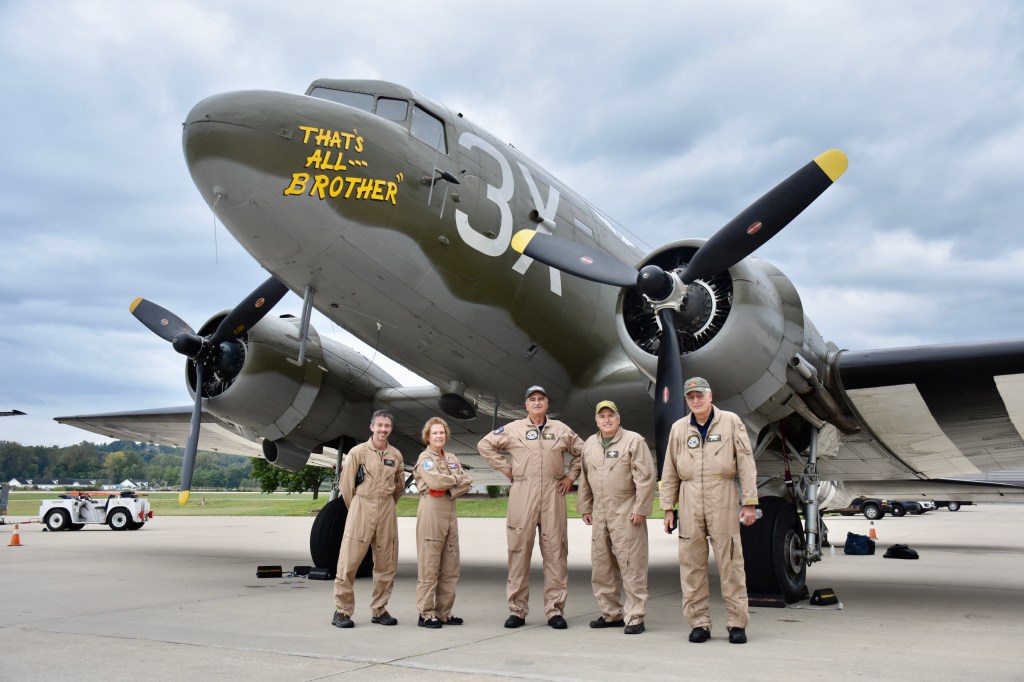
“That’s All, Brother” is one of roughly 100 DC-3/C-47 aircraft still flying today. In fact, it was the first one I ever set foot on. Back in September 2020, the famous airplane — operated by the Commemorative Air Force (CAF) Central Texas Wing — paid a visit to Spirit of St. Louis Airport on its way to Washington, D.C., for the flyover commemorating the 75th anniversary of the end of World War II. 
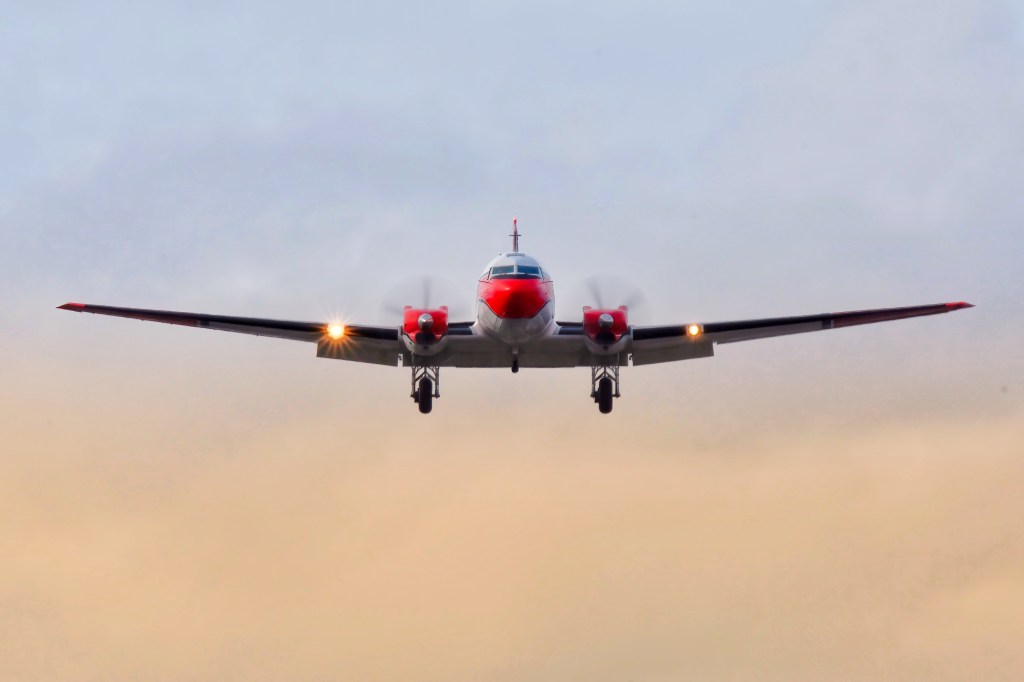
I’ve been fortunate to catch a couple other C-47s in flight over the years, including one used for aerial imaging and even one of the famous Basler BT-67 turboprop conversions. But I knew…. I just knew that one day I wanted to fly in one myself.

Well, that day finally came last month in beautiful Auckland, New Zealand. I had been in Australia for almost three months on a work assignment to learn about Boeing’s nearly 100 years of heritage in the country. My husband Scott flew out to meet me on the tail end of the trip, and the two of us ventured to New Zealand for a brief  vacation before returning to the U.S.
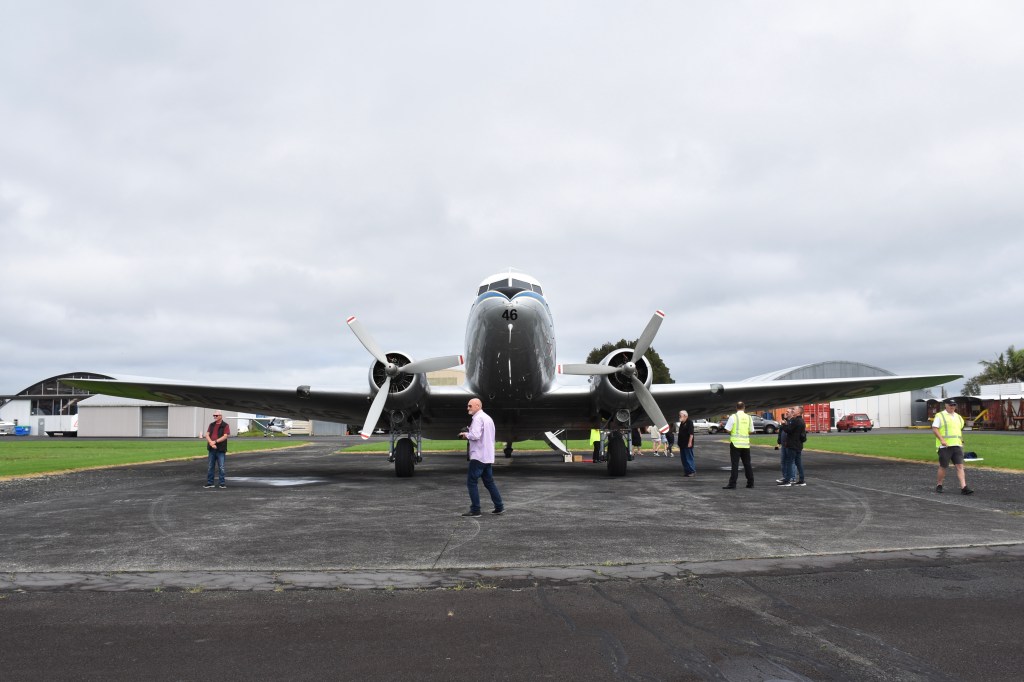
I had done a bit of research on scenic flights around Auckland, and when I found Fly DC-3 New Zealand, I knew it was “the one.” Of course, the fact that we were going to fly on a commercial aviation time capsule was reason enough to book this particular flight, but when we got to know the couple who runs the operation… that was just the icing on the cake (let’s make it a vanilla slice).

Geoff Cooper is the airplane’s chief pilot. The retired Air New Zealand Boeing 777 captain used to fly the C-47 with the Royal New Zealand Air Force. His wife, Jessica, leads the cabin crew — the same job she did years ago, also with Air New Zealand. And let me tell you… they do everything right.
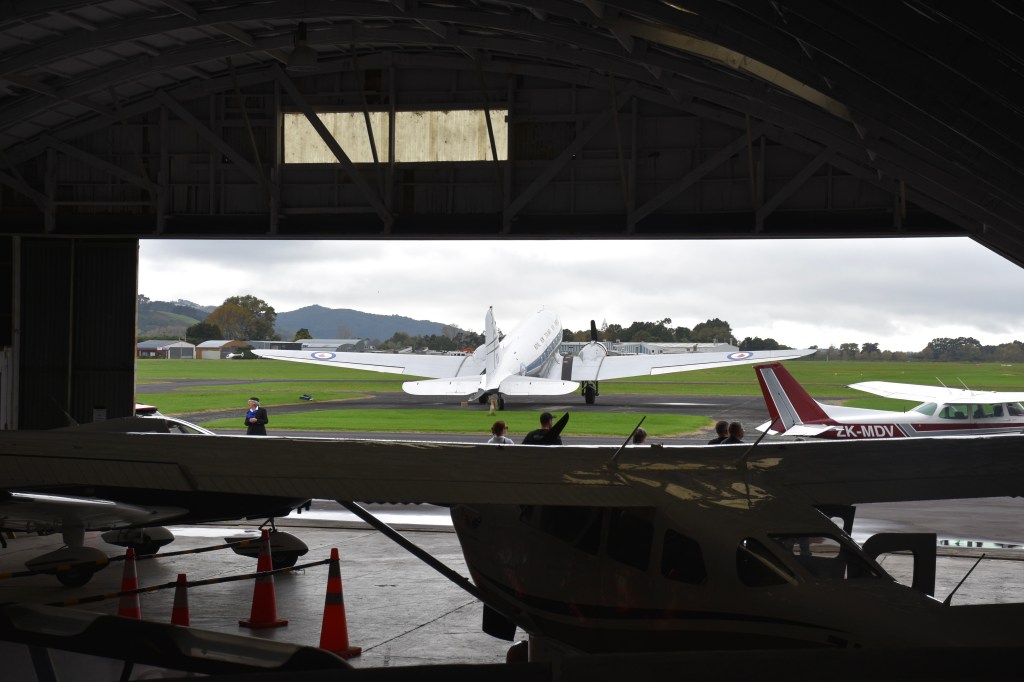
Passengers start their experience by walking into an authentic World War II hangar at Ardmore Airport, about 30 minutes southeast of Auckland. There they are greeted by cabin crew dressed in 1940s style uniforms with music from the era playing and nostalgic artifacts on display. They enjoy coffee and snacks while listening to a preflight briefing, then step outside the hangar and onto the tarmac, where beautiful Betsy awaits. 

One of more than 5,000 C-47s built by Douglas in Oklahoma City, Betsy entered service with the U.S. Army Air Forces in 1944. In 1959, the plane was delivered to Philippines Airlines where it remained for more than a decade. In the 1970s and 1980s, it flew with a variety of Australian airlines before coming to New Zealand in 1987.

Today, Betsy wears the beautiful colors of the Royal New Zealand Air Force No. 42 squadron and is just about the closest thing to a time machine that exists in the world today. I had been looking forward to this flight for at least 6 months, so when the day finally arrived, I was over the moon with excitement.

The morning of the flight, Geoff and Jessica kindly offered to pick me and Scott up from our hotel, since we didn’t have a car. When we arrived at Ardmore, it was rather dreary — gray skies, misty and hovering around 60 degrees — but that didn’t matter. To me, Betsy shone brighter than the sun.

We got to watch the pilots do all their checks and Scott even rode along for the engine run-up. Then we were given free rein — it was time to go shutter crazy. Passengers began arriving about an hour before the flight. You could feel the excitement within the hangar once everyone had arrived. With close to 30 passengers, it was a full flight.
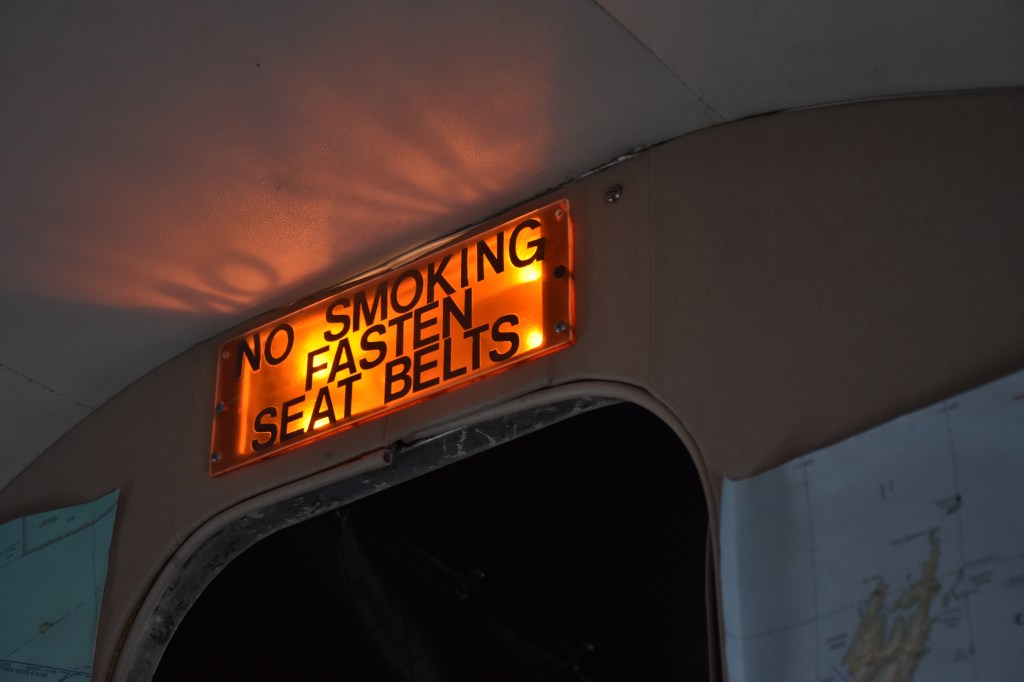
We boarded and got a safety briefing, and before we knew it we were ready to go. By that time, the sun had begun to peek through the clouds — it was a seemingly perfect day. The two Pratt & Whitney Twin Wasp engines purred as we taxied and roared as we powered down the runway. Seeing the prop vortices from inside the plane was one of the coolest aviation-related experiences I’ve had to-date.

When we lifted off the ground, it was sheer magic. To simultaneously defy gravity and travel back in time… what more could an airplane enthusiast / aviation historian ask for? Unfortunately, Betsy’s main landing gear wouldn’t retract, meaning our flight was cut short. But to be honest, that didn’t matter to me one bit. The most important thing is that we landed safe and sound. Plus, we still got to experience the flight of a lifetime.

To Geoff and Jessica… words can’t express how grateful I am to have met the two of you and to experience flight in your beautiful bird. I will always look back fondly on that morning when Betsy took us away from the real world, and up to the heavens.
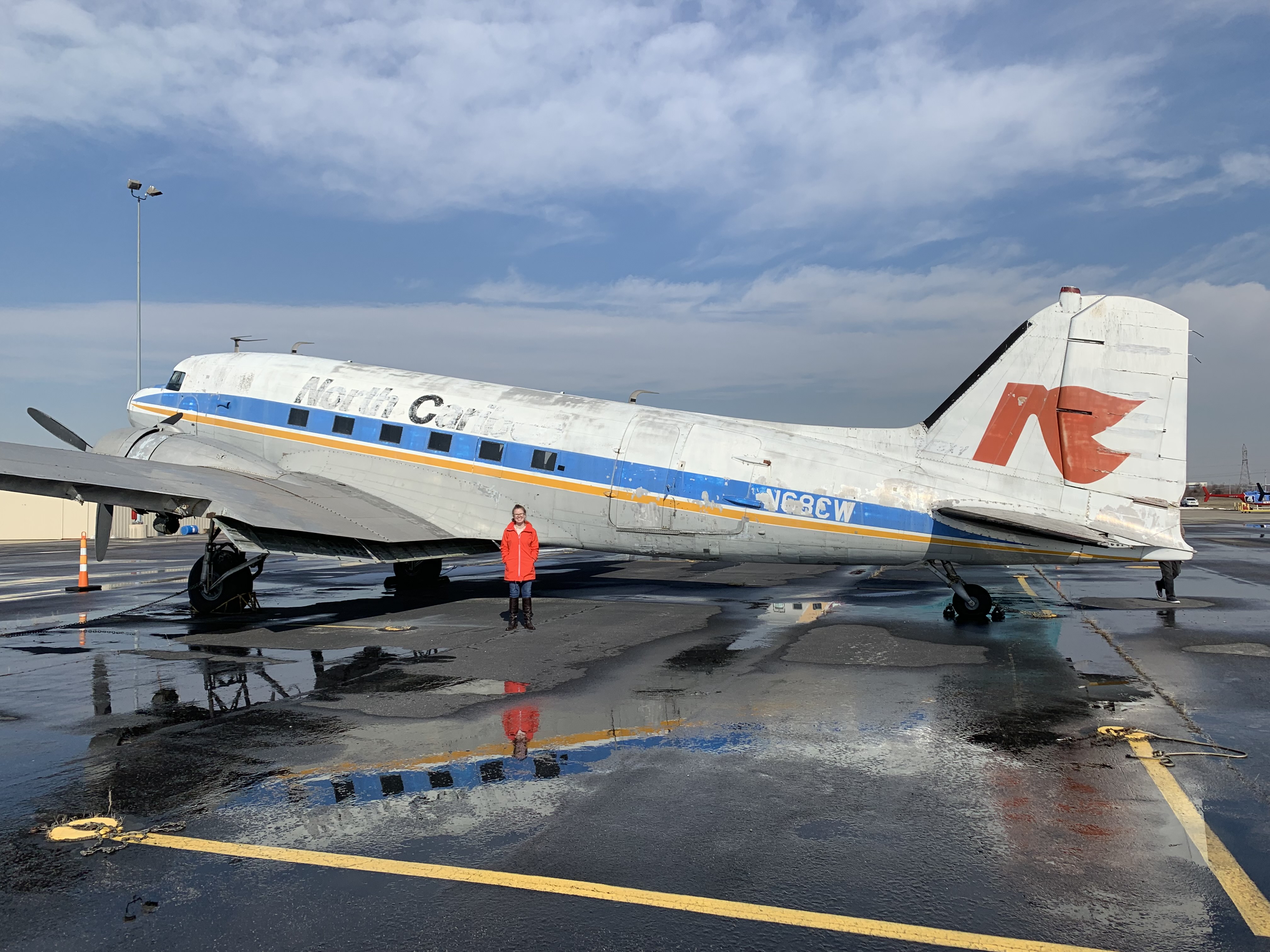
I’m happiest in the sky

Old planes, new planes.

Fast planes, slow planes.

Big planes, small planes.

I’ve seen all of ’em, flown in all of ’em and love all of ’em.

I don’t care who made it, who bought it, who owns it or who flies it—I love airplanes. I love the places they take me and the “real world” they take me away from. Simply put: I’m happiest in the sky.

Of course, I’m partial to Boeing. For one, I work there… but I’m truly fascinated by the company, its people and its products. It’s a remarkable, beautiful story of determination, perseverance, passion and innovation; and I’m humbled to be able to help keep that history alive.

This passion of mine has really taken me places, both figuratively and literally, and I’m truly grateful for that. Because, believe it or not, that very passion was just sitting dormant inside of me for a long, long time. It was gathering dust somewhere in a deep, dark corner of my mind, for more than a decade. But several years ago, a chance encounter with a metal bird that soared right over my head, just seconds after departing on MSP’s runway 17, was my “aha” moment. I was hooked.

I’m now officially three weeks into working in communications for our company’s historical archives. To say that being in this role is an honor would be an understatement. I am still brand new to this team and to the city of St. Louis, but I have never, ever, ever felt such an intense drive and such determination to do my best. And I love that.

Boeing’s story is one that needs to be kept alive… it needs to be told and retold. It needs to be heard and read, appreciated and understood. I myself understand and respect that all people don’t feel so drawn to these flying machines… but they do—and always will—touch all of our lives.

So, if I could ask anything of you, reading this right now, it would be… take a minute and “Google” William Boeing. Do the same for Donald Douglas, James McDonnell and James “Dutch” Kindelberger. Those men were the true pioneers of aviation—they saw promise in aviation, they believed they could build better airplanes and they stood up and grew these INCREDIBLE companies that today are all part of the Boeing family.

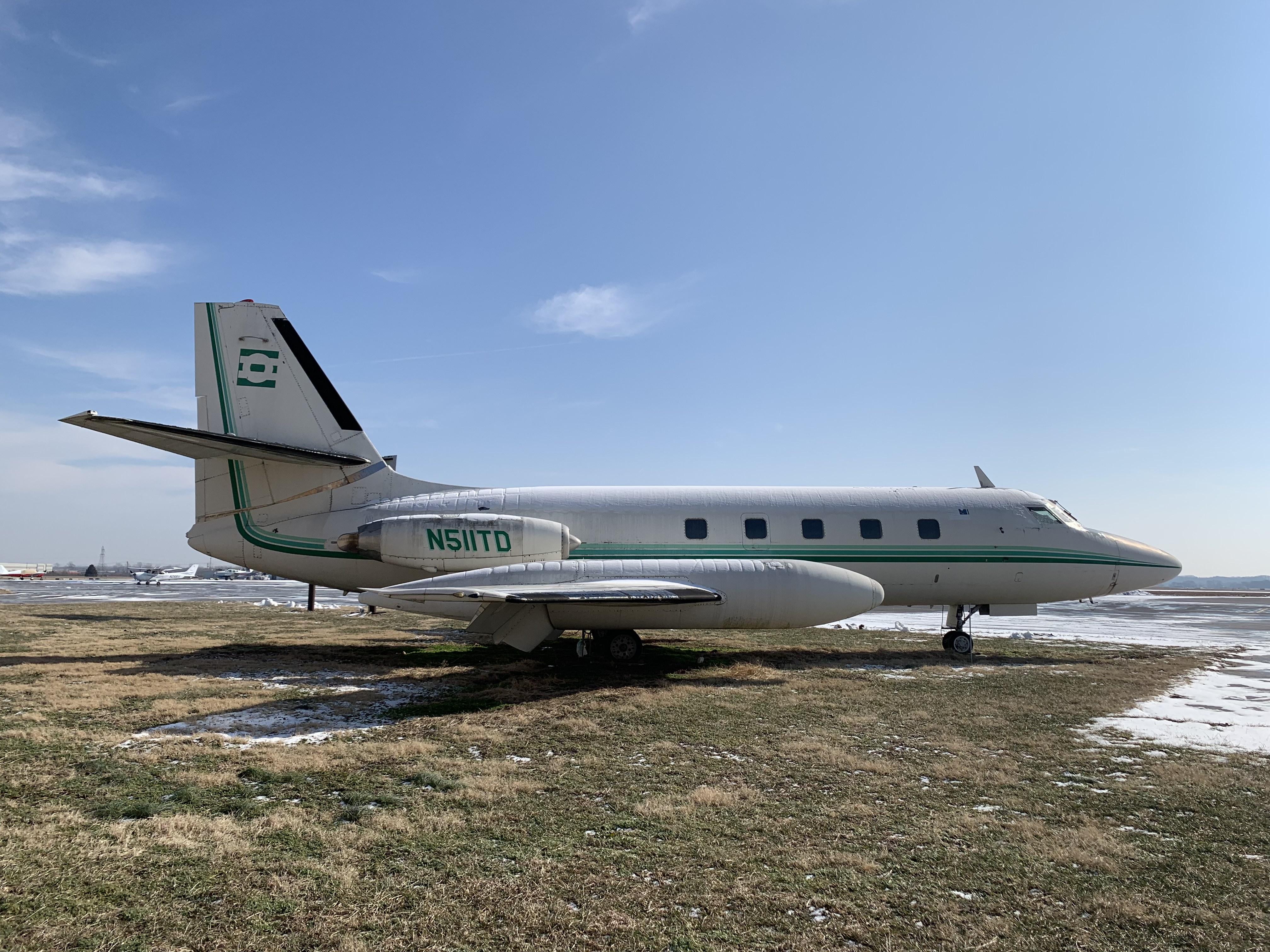
This afternoon, I was fortunate to visit the Greater St. Louis Air and Space Museum. Located at the St. Louis Downtown Airport (CPS), it is chock full of photographs, film, models and other artifacts that bring you right back to the golden age of flight. And, outside the hangars that the museum is housed in (which are on the National Register of Historic Places), you’ll find a stunning 1943 Douglas DC-3 (arguably the greatest airplane of all time), a Convair 440 that started its life with FinnAir in 1957, and a 1969 Lockheed JetStar once owned by none other than Howard Hughes.

I’ll leave you with a few photos from this afternoon, and there’ll be many, many more to come. I’m on a big adventure, I mean a big, BIG adventure, and I’m really lucky to share in that adventure with all of you.

Thanks for the love and the support.

IMG_7588IMG_7594IMG_7570

A Very Great Plane: The Douglas DC-3

I just heard one of my favorite sounds in the world – a prop plane flying nearby. That sound tends to bring my mind back to the early days of aviation, and this time was no different.

Over the last few weeks I’ve become mildly obsessed with the Douglas DC-3… would you believe that there are still thousands of those planes flying? December 17, 1935 – that was when the first one took to the skies. Sometimes I actually forget that planes were around that long ago, but they certainly were. The DC-3 was the “cream of the crop” in the aviation industry during those years and is credited today with having revolutionized air travel in a number of ways.

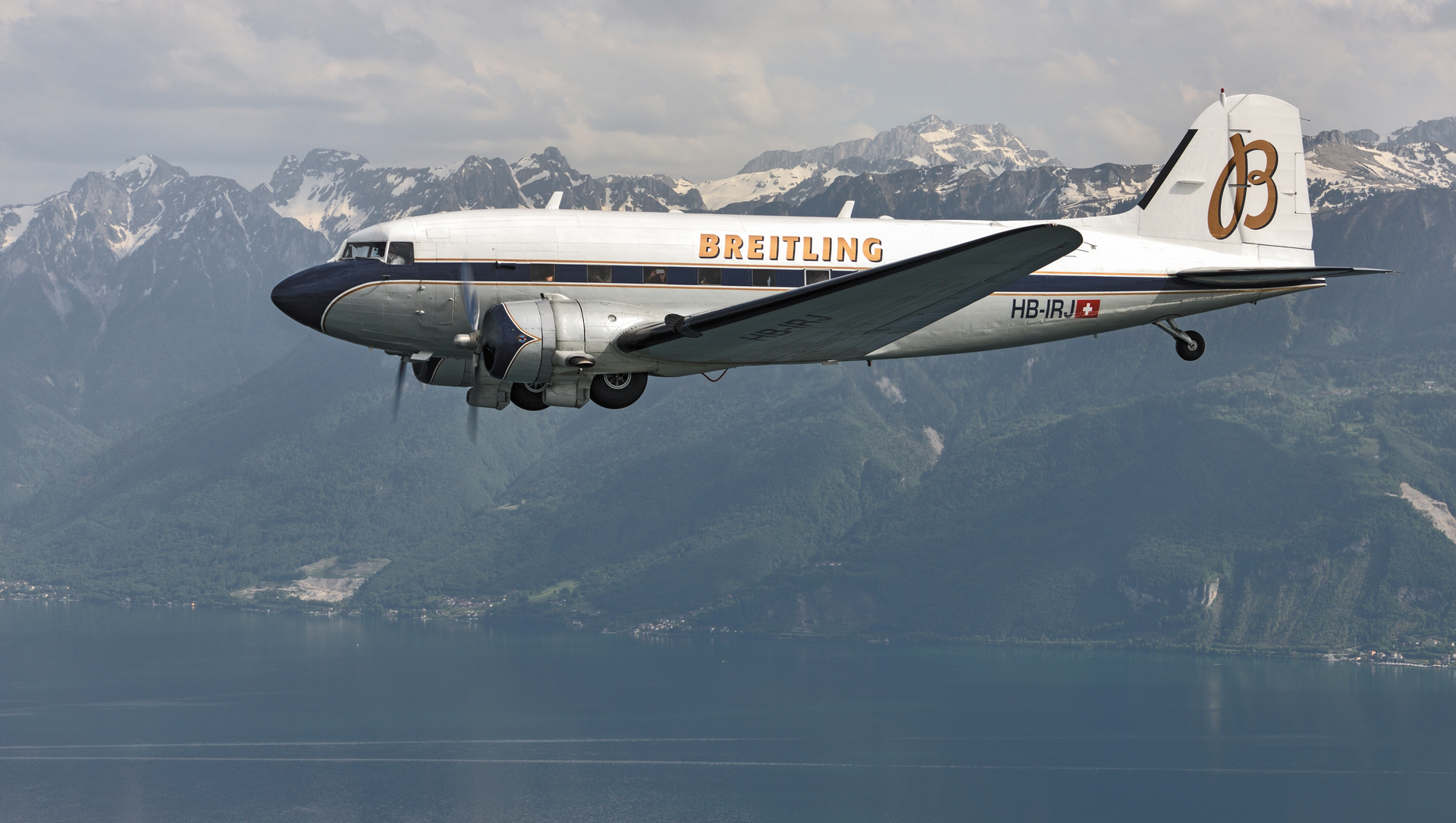
Breitling.png
A Breitling Douglas DC-3, Photo Courtesy: Breitling

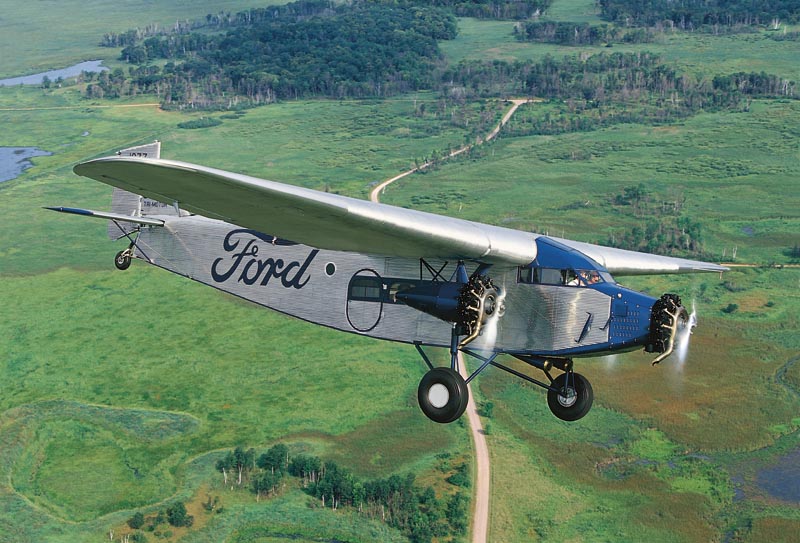
Before the DC-3 came around, there were two other planes that had a strong foothold in the market: the Boeing Model 247 and the “Tin Goose” Ford Trimotor.

The Trimotor first flew in June 1926, powered by (you guessed it) three engines – Pratt and Whitney Wasps. Transcontinental Air Transport (which would later become TWA) pioneered coast-to-coast service with the Trimotor. The plane was strong and sturdy, but unfortunately didn’t have what it took to stand up to the two competitors that would enter the market several years later – the 247 and the DC-1.

FORD_1.jpg
A Ford Trimotor, Photo Courtesy: Golden Wings Flying Museum

The Boeing Model 247 is considered to be the first modern airliner and had its inaugural flight in February 1933. It was the first plane that was capable of flying on only one of its two engines – also Pratt and Whitney Wasps. But just months later, the DC-1 was developed at the request of TWA. And even though the DC-1 itself wasn’t perfect, it paved the way to the eventual DC-3, which was as close to perfect as an airplane could be back then.

model_247_hero_med_01_1280x436.jpg
A United Air Lines Boeing Model 247, Photo Courtesy: Boeing

The DC-1 evolved into the larger, faster and more luxurious DC-2 and then nixed beds for upright seats to become the DC-3. Powered by two Wright Cyclone engines, the DC-3 was strong, fast, and comfortable. It had capacity to carry two crew members and 21-32 passengers. Back then, flying really was a luxurious experience, namely because it was just that – a luxury. The DC-3 also pioneered inflight movies.

Of course some of today’s airlines still offer that touch of glamour, but with the rise in low-cost carriers and even the legacy carriers offering stripped down “basic economy” fares, it’s not as common. Flying today is, for most, a means to get from point A to point B. Why else do you see people rapt with magazines or computers, and not with the fact that they’re FLYING? I mean… HELLO – you are six miles in the sky, soaring amongst the clouds in a 100,000-pound METAL TUBE. WHY AREN’T YOU STARING OUT THE WINDOW IN SHEER AMAZEMENT?

OK – I think I’ve made my point. I love flying, and I don’t take it for granted. I need to be in a window seat so I can constantly look out at the sky we’re in and the ground below, because I am amazed that we as humans were able to pioneer this concept. We figured out how to DEFY gravity. It’s remarkable! But the message I really want to convey to all of you is that the planes we fly on today were in some way, shape or form derived from the sturdy workhorse Douglas DC-3. It’s a legend. Why else do you think some 2,000 of the planes still fly? I can only hope that someday I’ll have a chance to fly in one of those time capsules myself.

Discovering my Aviation Roots: Part 2

This is the second entry of a two-part blog I did in an effort to learn more about my parents’ history in aviation. Last week, I posted about my dad’s ties to flying, from college (when his interest in aviation first began) through his careers in both the U.S. Air Force and with Eastern Airlines.

This week, we’ll learn more about my mom. She was with Eastern Airlines for about 14 years in the 70s and 80s and that’s where she and my dad met. I’ve always known how much she loved flying (and planes), but I knew there was still a lot I didn’t know about that love. She is a great storyteller with an ability to paint very vivid pictures through her words.

Enjoy!

When and how was your interest in aviation first piqued?

When I was very young, early grade school age, we lived in a rural area. Next door was a farmhouse and barn, and across the fields in the back of our house there was a small airfield. My oldest brother was often there, talking to the owner (Whitey) and the pilots, and taking an occasional lesson. I loved watching the windsock, and the planes would usually take off in the direction of our house. I loved being around my brother Steve and would often walk to the field with him. I think this is where my brother’s love of flying began.

We lived in northern Indiana, and many times planes that took off from (or were going to land at) O’Hare or Midway in Chicago, would fly over our house. I remember on cold nights being cuddled under a red and black Hudson Bay blanket in the bedroom with knotty pine walls that I shared with my brother Bob. When it was very very quiet, I could hear a distant deep hum which would grow steadily louder until I knew that the airliner was right over our house. And then I would listen until I could no longer hear even a trace of the powerful propeller sound. I imagined the people in the plane sleeping or reading; I wondered where they were going. I also wondered about the people that got to work on those planes.

What years were you a flight attendant and what was that job like? Do you have a favorite memory?

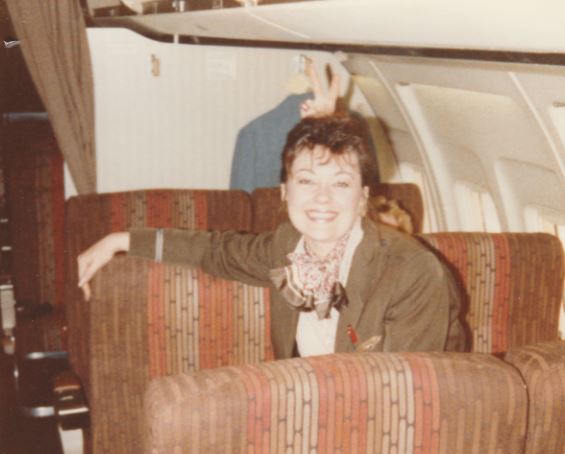
bunny-ears
Mom as a flight attendant with Eastern Airlines

I was hired by Eastern Airlines in the fall of 1973. I went through training and after graduation my class was furloughed. We were called back in the fall of 1974 and went through an abbreviated training refresher (one week instead of the typical six weeks). I chose New York as my first base station and was with Eastern until I resigned in late 1987.

I was based in Chicago after a short time in NYC, and in Atlanta after that. Considering who I was when I started, I grew up with Eastern Airlines. I can not single out a favorite memory, there were so, so many. Being a flight attendant is a unique lifestyle, and also a very physical job. I feel like when I was working as one, there was still a small element of “glamour” attached to the job, but nothing like the years before.

What is your favorite thing about flying?

I have always loved skimming clouds… just the beauty of the clouds and the realization of how fast you are going.

What is your least favorite thing about flying?

Windy landings were my least favorite aspect of flying; I mean really windy, not just a gentle buffet now and then. Seated in the rear of the plane you could hear the throttles being adjusted, and in the front of the plane “glide slope” and the other infamous voice alarms were things I was never fond of hearing.

Tell me about the most frightening experience you ever had on an airplane.

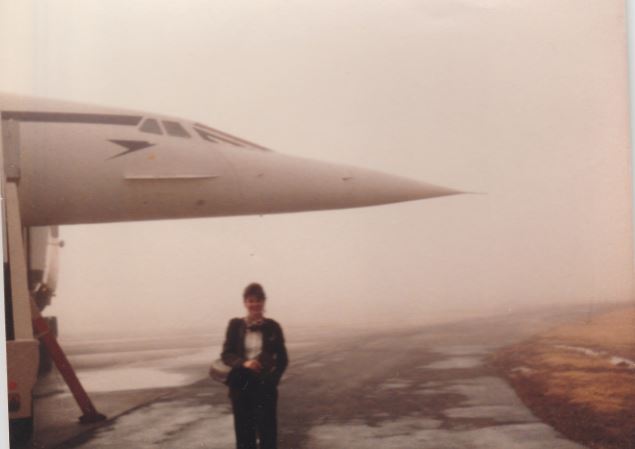
concorde
Mom in front of a Concorde

I had a few, but not one stands out as being the most frightening. Shortly after takeoff in an L-1011 from Atlanta to San Juan, I was seated at the third door back on the left. As the gear was coming up there was a very loud “BOOM!” The plane shuddered a bit and lots of overhead bins flew open. There was not a lot of communication from the crew except that we were returning to the airfield. As we were coming in, I could see emergency vehicles on the ground with their lights flashing. We landed safely, but apparently some kind of mechanism in the gear had let go.

Another one was during an overnight flight from Seattle to Atlanta. Service was done, lights were out, and passengers were sleeping. The senior flight attendant and I were sitting together in a couple of seats in first class when a loud rumbling and vibration occurred; the sound was just like the sound of something meant to slow the plane down, like the flaps or speed brake, except we were at cruising altitude. The captain came out and talked to us shortly after. He explained what had happened and his other comment was, “I almost had to change my pants with that one.”

Tell me about the most magical and/or amazing experience you ever had on an airplane.

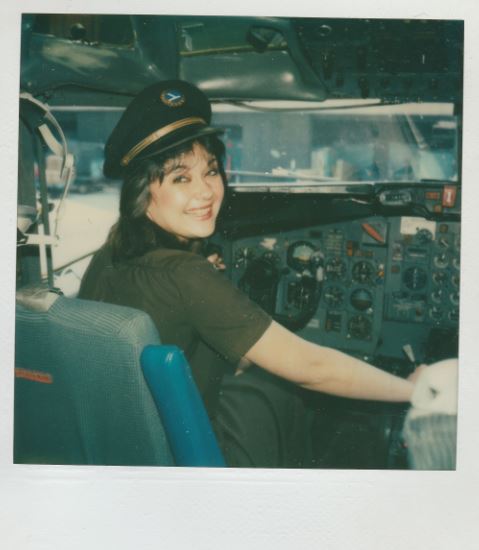
cockpit
Mom in the cockpit

So much about flying was amazing to me, it is hard to pinpoint. However, when we had an empty airplane that needed to go to another airport for positioning (a “ferry” flight), I would always accept the captain’s offer to sit in the cockpit jump seat. Takeoffs and landings up there were so exciting to me, and the view from there, with just basically the sound of the wind slipping by, was indeed magical.

Do you have a favorite model of airplane? If so, what is it and why is it your favorite?

We had six different aircraft during my time with Eastern, from the prop-jet Lockheed L-188 Electra to the Boeing 757… I loved all of them. As much as I love the sound of jet engines, the sound of the four big prop-jet engines on the Electra gave me goosebumps. The nimble little DC-9, the steady workhorse 727, all the way to the long, long 757 with the back end that would sway a bit during flight… I really did love them all.

What do you miss most about your career in aviation?

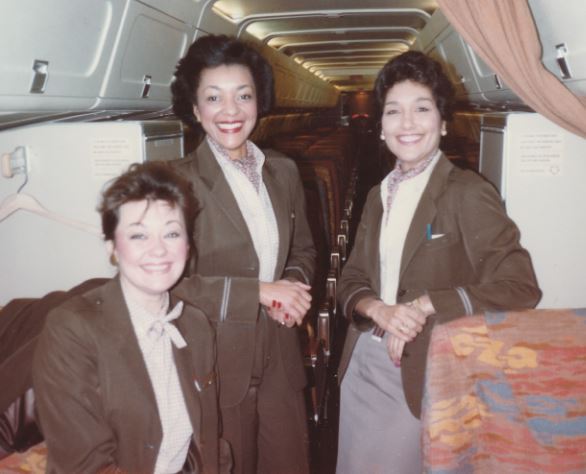
group-photo
Mom with friends and coworkers Lucinda and Beverly

I miss the airplanes of course, and the crew members that I got to know, and the ability to fly almost anywhere for a minimal amount of money. Eastern was like a huge family… everyone was there because they loved airplanes and the industry. It is very sad that the company doesn’t exist anymore after such a long, proud history.

What is the most drastic change you’ve seen over the years between when you first started your aviation career and today?

Like I said earlier, I flew in the days when there was still something special about air travel. We served full meals in coach even on short flights, and served several-course meals on china and crystal in first class on longer ones. Toward the end of my career with Eastern, the “no frills” seats were starting to appear, but they were nothing like many of today’s flights that have more of a bus trip feel. Besides a seat, you got real service with your ticket when I worked for Eastern.

And that’s that. I set out to learn more about my parents’ ties to aviation, from their careers to their favorite (and least favorite) memories, and I’d say I succeeded.

As I mentioned, my mom has a way with words… everything she says and writes allows me to effortlessly envision exactly what she is referring to just like I am right there alongside her in her past.

I knew she would have great things to say about her aviation career and her love of planes, and she most certainly didn’t disappoint.