Long live the Queen: VC-25A is now officially the longest serving presidential aircraft

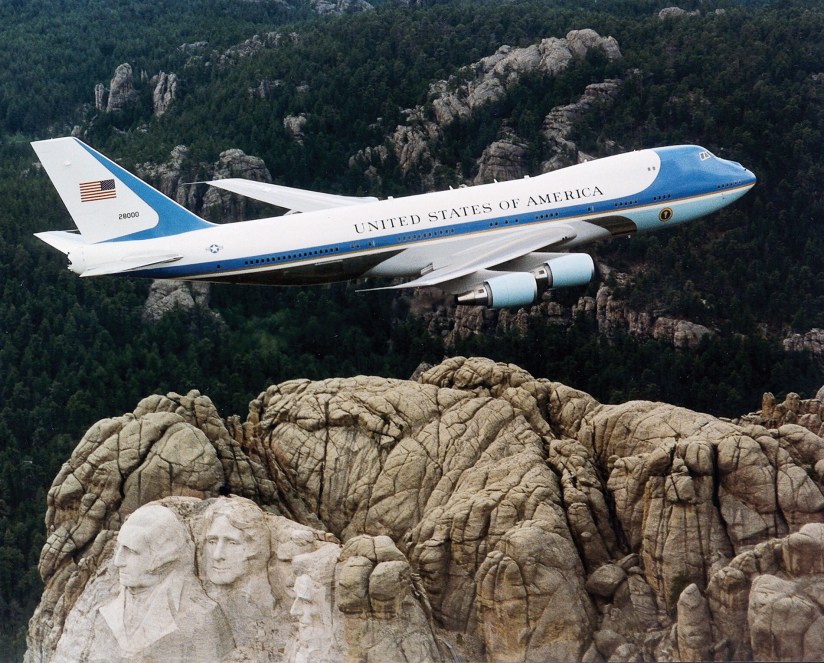
SAM 28000, one of two current VC-25As (photo: Wikipedia)

It’s official: the Boeing VC-25A—two modified 747-200Bs with tail numbers 28000 and 29000, more commonly referred to as Air Force One—is now the longest-serving presidential aircraft. I’ve been tracking this milestone for awhile now, and to be quite honest, I actually botched it at first (don’t judge… I’m not a mathematician!).

Because I also have a strange fascination with the Kennedy family (who doesn’t?), I knew that JFK’s two modified 707s with tail numbers 26000 and 27000 (the Boeing VC-137C) were most certainly the longest serving presidential aircraft of all time… I didn’t, however, realize just how soon today’s Queens of the Skies were going to steal the crown from those two planes that first entered service when Kennedy was in office.

I originally (and mistakenly) did my calculations as follows (using the entry-into-service date for the VC-137C as opposed to the first time it actually flew as Air Force One). This had VC-25A officially becoming the longest serving presidential aircraft on Aug. 5, just a couple days ago.

VC-137C (two different modified 707s:  SAM 26000 and SAM 27000)

10,194 days between Oct. 9, 1962 (VC-137C first entered service) and Sept. 6, 1990 (VC-25A first flew as Air Force One)

VC-25A (two different modified 747-200Bs: SAM 28000 and SAM 29000)

10,195 days between Sept. 6, 1990 (VC-25A first flew as Air Force One) and Aug. 5, 2018

However, upon realizing my mistake and finding the actual date when VC-137C first flew with Kennedy on board (therefore using the call sign Air Force One), November 10, 1962, I realized that my timeline had moved up roughly a month and that this milestone actually happened on July 4 of this year (pretty cool date for an American milestone, eh?).

VC-137C (two different modified 707s:  SAM 26000 and SAM 27000)

10,162 days between Nov. 10, 1962 (VC-137C first flew as Air Force One) and Sept. 6, 1990 (VC-25A first few as Air Force One)

VC-25A (two different modified 747-200Bs: SAM 28000 and SAM 29000)

10,163 days between Sept. 6, 1990 (VC-25A first flew as Air Force One) and July 4, 2018

It is important to note, however, that this doesn’t mean the 747 (generally speaking) is the longest serving presidential aircraft… that honor still goes to the 707, at least for now. Dwight D. Eisenhower was actually the first to fly in a modified Boeing 707 using the call sign Air Force One (VC-137B) when he departed Dec. 3, 1959 on his “Flight to Peace” goodwill tour to 11 Asian nations.

The 747 won’t officially take the crown from the 707 for another three years, on June 11, 2021.

Boeing 707

11,235 days between Dec. 3, 1959 (707 first flew as Air Force One) and Sept. 6, 1990 (747 first flew as Air Force One)

Boeing 747

11,236 days between Sept. 6, 1990 (747 first flew as Air Force One) and June 11, 2021

I want to give a special thanks to our incredibly awesome historian here at Boeing, Mike Lombardi, for reminding me that it’s important to make these distinctions. And, I’ll add… that June 2021 milestone is a surefire thing since the new Air Force One planes currently on order are two 747-8s expected to be delivered (last I heard) by 2024. So even if they were delivered tomorrow, they’re still 747s and the math still works… so there.

With that, there’s only one thing left to say: Long live the Queen.

Boeing: Air Force One (read about past, current and future presidential aircraft)
A Very Great Plane: The Douglas DC-3

I just heard one of my favorite sounds in the world – a prop plane flying nearby. That sound tends to bring my mind back to the early days of aviation, and this time was no different.

Over the last few weeks I’ve become mildly obsessed with the Douglas DC-3… would you believe that there are still thousands of those planes flying? December 17, 1935 – that was when the first one took to the skies. Sometimes I actually forget that planes were around that long ago, but they certainly were. The DC-3 was the “cream of the crop” in the aviation industry during those years and is credited today with having revolutionized air travel in a number of ways.

Breitling.png
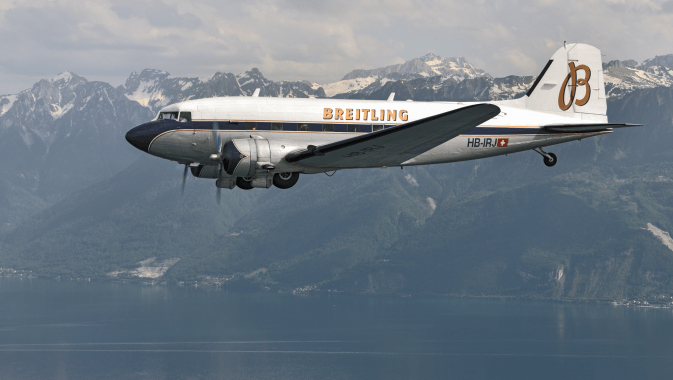
A Breitling Douglas DC-3, Photo Courtesy: Breitling

Before the DC-3 came around, there were two other planes that had a strong foothold in the market: the Boeing Model 247 and the “Tin Goose” Ford Trimotor.

The Trimotor first flew in June 1926, powered by (you guessed it) three engines – Pratt and Whitney Wasps. Transcontinental Air Transport (which would later become TWA) pioneered coast-to-coast service with the Trimotor. The plane was strong and sturdy, but unfortunately didn’t have what it took to stand up to the two competitors that would enter the market several years later – the 247 and the DC-1.

FORD_1.jpg
A Ford Trimotor, Photo Courtesy: Golden Wings Flying Museum

The Boeing Model 247 is considered to be the first modern airliner and had its inaugural flight in February 1933. It was the first plane that was capable of flying on only one of its two engines – also Pratt and Whitney Wasps. But just months later, the DC-1 was developed at the request of TWA. And even though the DC-1 itself wasn’t perfect, it paved the way to the eventual DC-3, which was as close to perfect as an airplane could be back then.

model_247_hero_med_01_1280x436.jpg
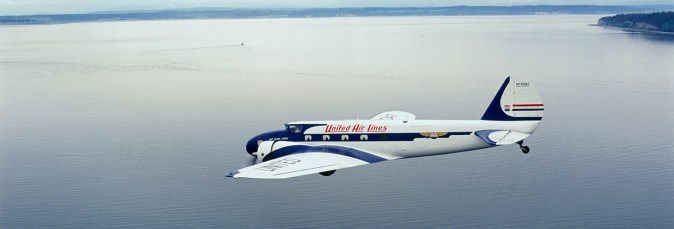
A United Air Lines Boeing Model 247, Photo Courtesy: Boeing

The DC-1 evolved into the larger, faster and more luxurious DC-2 and then nixed beds for upright seats to become the DC-3. Powered by two Wright Cyclone engines, the DC-3 was strong, fast, and comfortable. It had capacity to carry two crew members and 21-32 passengers. Back then, flying really was a luxurious experience, namely because it was just that – a luxury. The DC-3 also pioneered inflight movies.

Of course some of today’s airlines still offer that touch of glamour, but with the rise in low-cost carriers and even the legacy carriers offering stripped down “basic economy” fares, it’s not as common. Flying today is, for most, a means to get from point A to point B. Why else do you see people rapt with magazines or computers, and not with the fact that they’re FLYING? I mean… HELLO – you are six miles in the sky, soaring amongst the clouds in a 100,000-pound METAL TUBE. WHY AREN’T YOU STARING OUT THE WINDOW IN SHEER AMAZEMENT?

OK – I think I’ve made my point. I love flying, and I don’t take it for granted. I need to be in a window seat so I can constantly look out at the sky we’re in and the ground below, because I am amazed that we as humans were able to pioneer this concept. We figured out how to DEFY gravity. It’s remarkable! But the message I really want to convey to all of you is that the planes we fly on today were in some way, shape or form derived from the sturdy workhorse Douglas DC-3. It’s a legend. Why else do you think some 2,000 of the planes still fly? I can only hope that someday I’ll have a chance to fly in one of those time capsules myself.

Striving to keep an open mind, a full heart and thick skin

I’ve been quite happy lately. “Why?” you ask? Because I’ve actually been chasing and fulfilling a dream, and have found along the way how good it really feels to accomplish something, especially when you’re very passionate about that something.

“The Great Planes” on Instagram has well over 600 followers – something I never thought I’d see just five months into it. Minneapolis-St. Paul International Airport (MSP), my home away from home, has shared TWO of my photos on their Instagram account – and just yesterday, Sun Country Airlines posted one of my photos on theirs. These may seem like very minute successes, but they’re actually huge for me.

It wasn’t terribly long ago that I was relaying this dream of becoming an aviation journalist to my husband Scott… thinking nothing would ever come of it. I can even remember SO vividly a time that we were walking through Loring Park and talking about this very subject. Scott said to me, “Why don’t you just write something up and submit it to newspapers or something?” It got me sort of excited, but I didn’t really think I could do something like that. I didn’t think I had the will and the drive to TRY to do something like that.

But lo and behold, just months later, here I am with my second piece published on the Airways Magazine website, thanks once again to the immense kindness of THE Aviation Queen: Benét Wilson.

If you remember, my first piece was about how smaller manufacturers, specifically Embraer and Bombardier, are stepping up to the plate to compete with the big guys: Boeing and Airbus. It was fun to see my family and friends react to my work being published. And it was equally as fun to see the comments and likes on Facebook, and the retweets and favorites on Twitter.

My second piece, though, was a bit different. This one was more of an Op-Ed on a topic that I knew had the potential to cause a bit of controversy. Even though it happened well over a month ago, I didn’t think people had quite gotten over the “dragged doctor” incident on United Flight 3411…

I was right.

It seemed that the popular opinion following the incident was that United Airlines is truly, utterly awful. BELIEVE me, I do think United really messed up. I think what happened was awful and that the airline is ultimately at fault. I also think there are two sides to every story. I really just wanted to try to get people to look at what happened in a different light. Trust me, I HATE what happened to Dr. David Dao, as most people do. At the same time, however, I do NOT think it is fair that the lasting impression following flight 3411 has been United = Bad, Doctor = Good. Because it’s just not that cut and dry.

For my story “Is Ignorance Bliss? United Flight 3411 is Part of a Larger Story that Isn’t Being Told” I had the pleasure of interviewing Anthony Roman, president of Roman and Associates, a risk management and investigation firm. Roman, a former commercial pilot himself, noted that even though United was ultimately the catalyst behind this unfortunate incident, Dr. Dao was still at fault to some extent, namely for not obeying the commands of law enforcement personnel. I also spoke with Jamie Horwitz of the Association Professional Flight Attendants (APFA) who provided some background information on the recent congressional hearing on flight 3411 that he attended. Jamie also directed me to the recent Op-Ed written by Bob Ross, president of the APFA, that shed light on bigger issues in the airline industry, including constant pressure from Wall Street to please investors.

I knew some angry people would voice their disagreement after reading my piece, and they didn’t disappoint. Some people respectfully disagreed (thank you), and others said things that were slightly hurtful, including:

“Airways Magazine is known for its interesting and very professional writing about aviation. But this article is totally nonsense. Please, put it offline and save at least your reputation.”

“What a load of absolute bullshit! Sometimes I simply cannot believe the crap you Americans come up with!”

“How much is the writer getting from this?”

“This definitely comes off as a shill piece.”

But, you know what, there were some people who either agreed with the article, or respected and supported the thoughts presented in it. My favorite was:

“Finally someone calls out the fact that the passenger failed to comply with law enforcement. Thank you!”

Those who know me well, know how incredibly sensitive I am. I cry fairly easily, and simply put, I hate to be hated. But… upon reading these comments, both the good and the bad, I realized how much I’ve toughened up. Not only did I not even flinch at the bad comments, I actually giggled and was weirdly thrilled by it. To think that something I wrote and ideas I shared could affect people in a way that compels them to say something, that right there is enough motivation for me to keep doing what I’m doing, and keep doing it with a smile on my face.

I’d like to think I am a good person. In the past, however, I may have been what some people would consider a “pushover” … well, not anymore. Thick-skinned Annie is here to stay. I’ll defend myself, hold true to my words and stand up for what I believe is right. And, as this post’s title alluded to, I’ll keep an open mind and a full heart while I am at it. At least I’ll try my best to. 😉

A Truly Great Plane: The Boeing 747

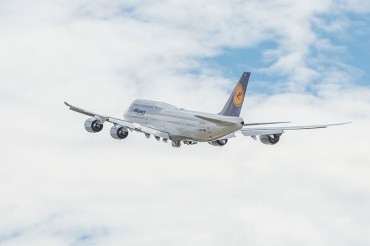
lufthansa-gallery-full-10
Photo Courtesy of Boeing

Two hundred and sixty-four days… it sounds like a long time, but I know it will come quickly. Just about eight months from now I’ll be soaring through the clouds aboard the Queen of the Skies: a Boeing 747. While it may not sound incredibly exciting to some, it will be truly monumental for me, as it will be my first time flying on one of my favorite aircraft of all time.

Sure, I love plenty of airplanes: the Boeing 377 Stratocruiser, the Lockheed L-1011 TriStar, the McDonnell-Douglas MD-11, but those aircraft, or at least the passenger versions of them, are obsolete. My only chance to fly on one of my favorite planes was to snag a ticket on a Boeing 747. And with the help of my dad, I did just that.

I’ve said it before, and I’ll say it again:

I consider only one man made “thing” on this earth to be as truly remarkable and awe-inspiring as Mother Nature herself: the airplane.

And the Boeing 747 was the inspiration behind that quote by yours truly. It’s hard not to love that plane – don’t you think?

Let’s start with how this beauty came to be. Of course the roughly 50,000 people who worked on this plane in the late 1960s are called “the Incredibles” – how could they not be given such a nickname? The engineers, the mechanics, the secretaries… they all contributed to aviation history when they seemingly “whipped up” the world’s largest civilian airplane in a mere 16 months.

The final design was offered in three different models: all passenger, all cargo, and a convertible passenger/cargo model. And I’m over the moon that my dad and I are getting to fly on the convertible model, often referred to as a “combi.”

The 747 is also the reason the largest building (by volume) was even built. The Boeing Everett Factory in Everett, Washington is where the manufacturer’s largest planes are constructed. Some equate the size of the facility to that of a city; workers even use bicycles to get around.

And it’s no wonder they had to construct that beast of a building – the 747 is huge. I work on the sixth floor of an office building in downtown Minneapolis, and knowing that if a 747 was parked on the street below, its tail would be at eye level with me, is just astounding to say the least.

While the 747’s iconic “hump” makes it so easily identifiable, the plane has been modified a number of times over the last several decades. The National Aeronautics and Space Administration (NASA) modified two 747s into shuttle carriers (the first in 1976 and the second in 1988), in 1990 two were modified to serve as Air Force One, and in 2007 Boeing introduced the “Dreamlifter” – a specially modified version of the 747 used to carry large composite structures, including fuselage sections of the 787 Dreamliner. Additional modifications over the years such as an extended upper deck and the addition of winglets on some models have continued to shape the look, feel, and functionality of the plane.

Nearly three years ago, the 747 became the first wide-body airplane to reach the 1,500 milestone, when number 1,500 was delivered to Germany-based Lufthansa. And while that was reason to celebrate, the truth is – these planes may not be around much longer. Both United and Delta airlines are retiring the jumbo jet this year, and that news was what fueled my desire to catch a ride on one while I still had the chance.

The plane is gorgeous. It’s iconic. It’s a symbol of a special era in flight. And I’m ecstatic that I’ll have the privilege to fly in one. A flight in a 747 is certainly a “bucket list” item for me, as I’m sure it is for countless aviation enthusiasts. And you can bet your bottom dollar that come November 6, when I set foot on that plane and we lift off the ground, I’ll be overcome with joy as I check that item off.